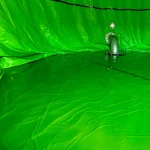
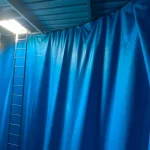
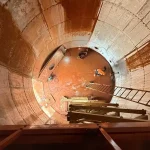
Polyvinyl chloride (PVC) is a versatile polymer used in various liquid containment applications. Its flexibility and adaptable formulation make it suitable for many internal tank lining systems.
However, PVC tank liners can differ significantly in their composition, mechanical properties and operating limitations. Membrane thickness, reinforcement, chemical compatibility and fabrication methods all influence their performance.
Understanding these characteristics helps explain why different PVC membranes suit different storage conditions. This article examines PVC tank liner material, its physical properties, fabrication characteristics, practical applications and technical limitations.
What is a PVC Tank Liner?
A PVC tank liner is a flexible polymer membrane designed to create an internal containment barrier within a storage tank. The membrane separates stored liquids from the structural tank surfaces.
Unlike rigid PVC products, flexible PVC membranes can accommodate various tank dimensions and internal configurations.
A complete PVC lining system may include:
-
Flexible PVC membrane sheets.
-
Fabricated membrane sections.
-
Welded seams.
-
Reinforcement layers.
-
Attachment and termination points.
-
Sealed connections around penetrations.
-
Protective underlay where required.
The membrane provides containment, while the tank structure supports the stored liquid. These functions remain separate throughout the operating life of the storage system.
The suitability of PVC tank liners depends on their material specification, tank configuration and intended storage application.
What are PVC Tank Liners Made of?
PVC tank liner material consists of polyvinyl chloride resin combined with selected additives. These components influence the finished membrane’s flexibility, strength, stability and resistance to environmental conditions.
Different formulations can produce membranes with significantly different performance characteristics.
Polyvinyl Chloride Resin
Polyvinyl chloride resin forms the primary polymer component of PVC membranes. Its molecular structure provides the foundation for the material’s physical and chemical characteristics.
Unmodified PVC is relatively rigid. Additional components allow manufacturers to produce flexible membrane formulations. The resin and additive combination determines many characteristics of the finished material.
Plasticisers
Plasticisers are additives that increase the flexibility of PVC. They reduce interactions between polymer chains, allowing greater molecular movement within the material.
This increased flexibility helps membranes accommodate bending, folding and complex tank geometries.
Plasticiser selection can influence several membrane characteristics:
-
Flexibility.
-
Elongation.
-
Low-temperature behaviour.
-
Dimensional stability.
-
Long-term material performance.
Different plasticiser formulations may produce different responses to prolonged liquid exposure. Their suitability depends on the intended operating environment.
Stabilising Additives
Stabilising additives help maintain selected PVC properties during manufacturing and operation. Heat stabilisers help limit thermal degradation during processing.
Other additives may improve resistance to particular environmental conditions. The required additive combination depends on the membrane’s intended application.
Not every PVC formulation provides identical resistance to heat, sunlight or chemical exposure.
Reinforcement Materials
Some PVC membranes incorporate textile reinforcement within their construction. The reinforcement provides additional mechanical support and influences how the membrane responds to applied forces.
Reinforcement can affect tensile behaviour, dimensional stability and resistance to excessive stretching. Its effectiveness depends on the reinforcement structure and surrounding PVC layers.
Flexible vs Rigid PVC: what is the Difference?
PVC can be manufactured into rigid or flexible products. The primary differences arise from material formulation and the incorporation of flexibility-enhancing additives.
Rigid PVC is commonly associated with pipes, fittings and structural profiles. Flexible PVC is used in applications requiring greater adaptability and deformation.
| Property | Flexible PVC | Rigid PVC |
|---|---|---|
| Flexibility | Greater flexibility | Limited flexibility |
| Plasticiser content | Typically contains plasticisers | Generally unplasticised |
| Deformation behaviour | Can accommodate bending | Maintains a more rigid shape |
| Typical applications | Membranes and flexible containment | Pipes, fittings and profiles |
| Tank lining suitability | Suitable for selected flexible lining systems | Generally unsuitable for flexible fabricated liners |
These differences explain why flexible PVC is used in fabricated tank lining systems. However, flexibility alone does not establish suitability for continuous liquid containment.
The complete membrane formulation remains essential.
Reinforced vs Unreinforced PVC Tank Liners
PVC membranes can be manufactured with or without internal reinforcement. Both constructions provide different mechanical characteristics and fabrication considerations.
Reinforced PVC Membranes
Reinforced PVC membranes typically incorporate a supporting textile layer within the polymer construction. This layer can help control deformation and distribute mechanical stresses.
Potential characteristics include:
-
Improved dimensional stability.
-
Greater resistance to excessive stretching.
-
Additional tensile support.
-
Controlled deformation under mechanical loading.
The reinforcement material and its construction influence the finished membrane’s performance.
Unreinforced PVC Membranes
Unreinforced PVC membranes rely primarily on the polymer formulation for their mechanical properties. They may provide greater adaptability where unrestricted membrane movement is beneficial.
Potential characteristics include:
-
Greater flexibility.
-
Higher elongation in certain formulations.
-
Adaptability to complex geometries.
-
Mechanical performance determined primarily by the PVC compound.
Comparison of Reinforced and Unreinforced PVC
| Characteristic | Reinforced PVC | Unreinforced PVC |
|---|---|---|
| Membrane construction | PVC with internal reinforcement | PVC without internal reinforcement |
| Dimensional stability | Generally higher | Formulation-dependent |
| Elongation | Often more restricted | Potentially greater |
| Flexibility | Depends on reinforcement construction | Depends on polymer formulation |
| Mechanical behaviour | Combined polymer and reinforcement properties | Primarily polymer properties |
Neither construction is universally superior. Selection depends on the mechanical demands and configuration of the containment system.
Key Physical Properties of PVC Tank Liners
PVC tank liner properties influence membrane behaviour during fabrication, installation and operation. Several characteristics deserve particular attention when evaluating material specifications.
Flexibility and Elongation
Flexibility describes the membrane’s ability to bend without developing unacceptable damage. Elongation describes how much the material can stretch under specified testing conditions.
These properties are related but represent different aspects of membrane behaviour. Flexible PVC can accommodate corners, transitions and irregular internal surfaces.
However, excessive stretching may create localised stress or membrane thinning.
Tensile Strength
Tensile strength describes a material’s resistance to failure under pulling forces. PVC membranes may experience tensile stresses during fabrication, handling and operation.
Reinforcement can significantly influence tensile behaviour. Test results should be interpreted alongside membrane thickness, construction and testing methods.
Puncture Resistance
Puncture resistance describes the membrane’s ability to withstand concentrated forces from objects or surface irregularities. Sharp edges and protruding components can create localised mechanical demands.
Membrane thickness, formulation and reinforcement can influence puncture resistance. However, suitable material properties cannot eliminate risks associated with unsuitable supporting surfaces.
Tear Resistance
Tear resistance describes the material’s ability to resist the propagation of existing damage. A small cut may develop into a larger tear under certain loading conditions.
The membrane construction influences how damage spreads through the material. Tear resistance is particularly relevant around connections, corners and other mechanically demanding areas.
Dimensional Stability
Dimensional stability describes the membrane’s ability to maintain its dimensions under specified conditions. Temperature, mechanical loading and material formulation can influence dimensional changes.
Reinforcement may help control excessive deformation. Suitable dimensional stability supports consistent membrane positioning and connection integrity.
Water Resistance
PVC membranes can provide effective barriers against water penetration. However, containment performance depends on the complete membrane system.
Seams, penetrations and attachment details must maintain suitable integrity. Water resistance should also be distinguished from suitability for drinking water contact.
How PVC Tank Liner Thickness Affects Performance
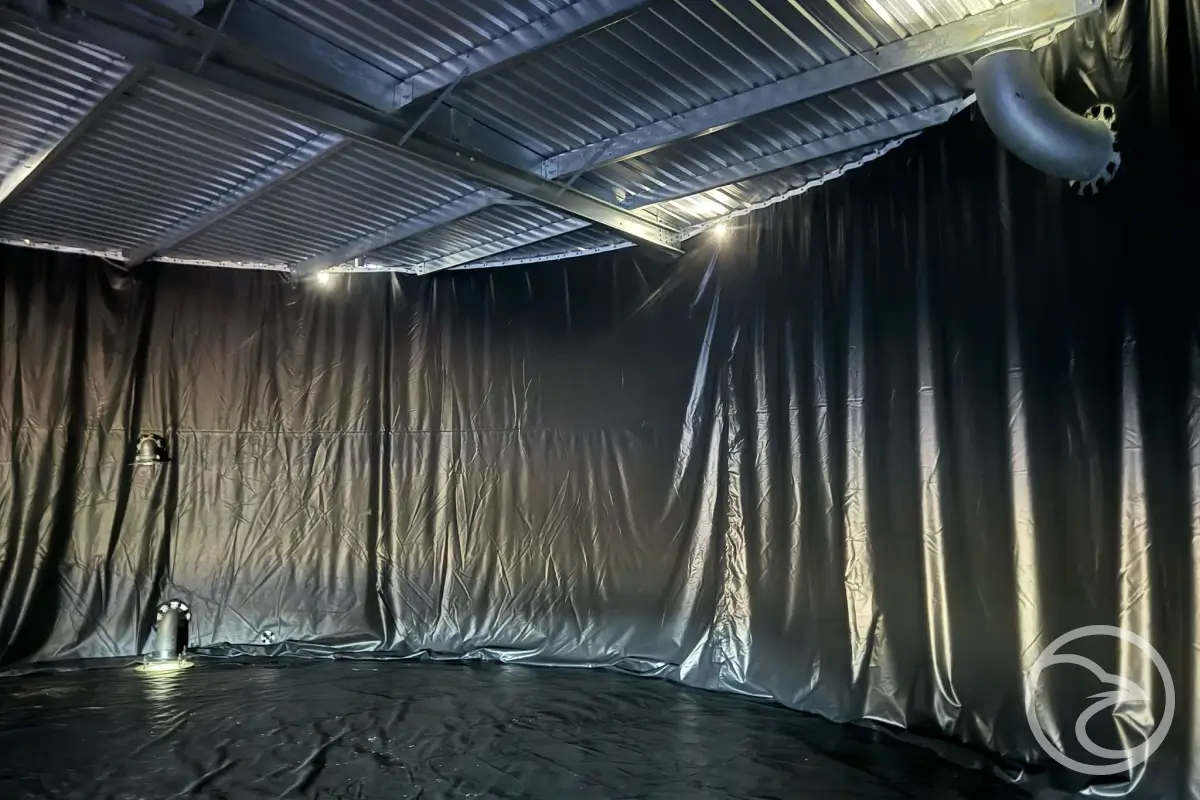
PVC tank liner thickness influences several aspects of membrane behaviour. However, thickness should not be treated as an independent measure of material quality. A thicker membrane may provide additional resistance to certain mechanical demands.
Its performance still depends on polymer composition, reinforcement and manufacturing quality.
Thickness can influence:
-
Membrane handling.
-
Flexibility during fabrication.
-
Resistance to puncture.
-
Mechanical behaviour around corners.
-
Joining and welding requirements.
-
Material weight.
Different PVC formulations can produce different mechanical properties at identical thicknesses. A reinforced membrane may also behave differently from an unreinforced membrane with similar thickness.
Technical comparisons should therefore consider the complete material specification.Understanding the differences between PVC tank liner repair and replacement helps determine the appropriate response to membrane deterioration.
How PVC Tank Liner Seams are Formed
Large PVC tank liners often require multiple membrane sections to create the finished containment barrier. These sections must be joined using methods compatible with the selected PVC formulation.
Thermal Welding
Thermal welding uses controlled heat to soften compatible membrane surfaces. Pressure brings the softened surfaces together to form a joint.
The resulting seam must maintain suitable mechanical and containment properties. Welding conditions depend on membrane thickness, formulation and equipment.
High-Frequency Welding
High-frequency welding uses electromagnetic energy to generate heat within compatible materials. PVC is particularly compatible with this joining principle.
The process can produce controlled seams during membrane fabrication. However, suitability depends on the specific membrane construction and manufacturing requirements.
Factors Affecting Seam Quality
Seam performance depends on more than the joining method.
Important considerations include:
-
Membrane compatibility.
-
Surface cleanliness.
-
Welding temperature or energy.
-
Applied pressure.
-
Seam configuration.
-
Fabrication consistency.
-
Appropriate quality control.
A strong membrane does not automatically guarantee reliable seam performance. The fabricated joints must remain suitable for expected mechanical and liquid exposure conditions.
Chemical Compatibility of PVC Tank Liners
PVC provides resistance to many substances. However, chemical compatibility varies between formulations and exposure conditions. The polymer, plasticisers and other additives may respond differently to particular chemicals.
Chemical compatibility assessments should consider:
-
Chemical identity.
-
Substance concentration.
-
Liquid temperature.
-
Exposure duration.
-
Chemical mixtures.
-
Water treatment additives.
-
Expected operating conditions.
Certain substances may influence membrane flexibility, swelling or mechanical strength. Chemical exposure can also affect additives within the PVC formulation.
A membrane suitable for general water storage may not suit industrial liquids containing aggressive substances. Manufacturer compatibility information should correspond with the actual storage environment.
Broad chemical resistance claims cannot establish suitability for every application.
Temperature Limitations of PVC Membranes
Temperature influences the physical behaviour of flexible PVC. Both elevated and reduced temperatures can affect membrane performance.
High-Temperature Exposure
Elevated temperatures may increase membrane softness and influence mechanical behaviour. Prolonged heat exposure can also accelerate certain material ageing processes.
The effects depend on PVC formulation, exposure duration and operating conditions.
Low-Temperature Exposure
Lower temperatures can reduce flexibility in certain PVC formulations. Reduced flexibility may influence handling, bending and resistance to mechanical damage.
Plasticiser selection can affect membrane behaviour under colder conditions.
Temperature Fluctuations
Repeated temperature changes may introduce expansion and contraction. These movements can affect membrane positioning and connections.
The lining system must accommodate expected dimensional changes without unacceptable stress. Temperature limits should always reflect the specific membrane documentation rather than general PVC characteristics.
Common Applications of PVC Tank Liners
Flexible PVC membranes can suit various containment applications when their properties match the operating environment.
| Application | Important Material Considerations |
|---|---|
| General water storage | Water resistance and continuous immersion compatibility |
| Potable water storage | Drinking water contact suitability |
| Fire water storage | Long-term immersion and applicable system requirements |
| Industrial water storage | Chemical compatibility and operating temperature |
| Agricultural water storage | Environmental exposure and water composition |
| Panel tank lining | Flexibility, dimensional stability and seam performance |
These applications introduce different material demands. A PVC formulation suitable for one storage environment may not suit another.
Application-specific assessment remains necessary regardless of membrane flexibility.
PVC Tank Liners and Drinking Water Compatibility
Drinking water storage introduces additional requirements for membrane materials. Waterproofing performance alone does not establish suitability for potable water contact.
PVC membranes contain additives that influence their physical characteristics. The complete formulation must therefore be assessed for its intended drinking water application.
In Australia, AS/NZS 4020 addresses testing products intended for contact with drinking water.
Relevant assessments may consider:
-
Effects on water taste and appearance.
-
Potential migration of substances.
-
Material effects on water quality.
-
Suitability under specified contact conditions.
Supporting documentation should apply to the actual membrane product and intended use. A general PVC material description does not demonstrate compliance with drinking water requirements.
Advantages and Limitations of PVC Tank Liners
PVC offers several useful characteristics for flexible containment systems. However, these characteristics should be considered alongside potential material limitations.
| Advantages | Limitations |
|---|---|
| Adaptability to complex tank geometries | Potential sensitivity to incompatible chemicals |
| Flexible membrane construction | Formulation-dependent temperature limitations |
| Compatibility with selected welding methods | Dependence on suitable seam fabrication |
| Availability of reinforced constructions | Potential changes in flexibility during ageing |
| Suitability for custom fabrication | Vulnerability to sharp surfaces and mechanical damage |
| Water containment capabilities | Drinking water suitability requires supporting documentation |
These characteristics vary between individual PVC membrane specifications. Other polymer materials may provide more suitable properties under particular operating conditions.
Our tank liner materials guide explains the differences between PVC and alternative membrane materials.
How PVC Material Properties Change Over Time
PVC membrane properties may gradually change during prolonged operation. Plasticiser migration, environmental exposure and mechanical stress can influence long-term flexibility.
The extent of these changes depends on membrane formulation and operating conditions. Material ageing may affect elongation, dimensional stability and resistance to mechanical damage.
Understanding water tank liner lifespan helps explain how these changes influence long-term containment performance. Existing membrane damage also requires assessment of its extent and underlying cause.
What to Look for in a PVC Tank Liner Specification
A technical membrane specification provides more meaningful information than the general PVC material description. Relevant documentation should identify the characteristics necessary for the intended application.
| Specification Parameter | Why It Matters |
|---|---|
| Membrane composition | Identifies the material construction |
| Thickness | Influences handling and mechanical behaviour |
| Reinforcement | Affects dimensional stability and tensile properties |
| Tensile strength | Describes resistance to pulling forces |
| Elongation | Indicates stretching behaviour under specified conditions |
| Puncture resistance | Describes resistance to concentrated mechanical forces |
| Tear resistance | Indicates resistance to damage propagation |
| Chemical compatibility | Helps establish suitability for stored liquids |
| Temperature range | Defines specified operating limitations |
| Seam properties | Supports assessment of fabricated joint performance |
| Water contact documentation | Helps establish suitability for intended water use |
Technical values should be interpreted alongside their corresponding testing methods. Results obtained under different test conditions may not be directly comparable.
The complete specification should reflect the actual containment requirements.
Frequently Asked Questions
What Material is Used in PVC Tank Liners?
PVC tank liners contain polyvinyl chloride resin combined with selected additives. Some membranes also incorporate textile reinforcement to modify their mechanical properties.
Why are PVC Tank Liners Flexible?
Plasticisers increase molecular mobility within the PVC material. This characteristic allows flexible membranes to accommodate bending and complex geometries.
Are Reinforced PVC Tank Liners Stronger?
Reinforcement can improve selected mechanical properties and dimensional stability. However, overall performance depends on the complete membrane construction.
Is Thicker PVC Always Better for Tank Lining?
No. Thickness influences mechanical behaviour but does not independently determine membrane suitability. Formulation, reinforcement and operating conditions remain important.
Are all PVC Membranes Suitable for Drinking Water?
No. Drinking water suitability requires appropriate testing and supporting documentation for the specific membrane.
Can PVC Tank Liners Lose Flexibility Over Time?
Yes. Material ageing and changes involving plasticisers may influence long-term flexibility. The extent depends on formulation and exposure conditions.
Are PVC Tank Liners Suitable for Every Storage Spplication?
No. Some storage environments require different chemical, thermal or mechanical properties. Material suitability must reflect the intended application.
Final Considerations on PVC Tank Liner Performance
PVC tank liners combine flexibility, adaptable material formulations and fabrication capabilities for various containment applications. However, the term PVC describes a material family rather than a universal membrane specification.
Plasticiser selection, reinforcement, thickness and seam construction all influence finished liner performance. Chemical compatibility and temperature limitations also determine suitability under particular storage conditions.
Understanding these characteristics allows more meaningful comparisons between different PVC membranes. Ultimately, reliable containment depends on matching the complete membrane specification with the intended operating environment.