Sectional water tanks provide flexible storage solutions for commercial, industrial, and fire protection applications. Their modular construction allows tanks to accommodate different capacities, layouts, and installation requirements. However, the connections between individual panels can become vulnerable to leakage over time.
Panel joints rely on correctly installed sealing materials, secure fasteners, and appropriate structural support. When these components deteriorate or experience excessive movement, water may escape through the connections.
Sectional water tank joint leaks can develop gradually or appear following changes in operating conditions. A minor leak may initially seem like a simple maintenance issue. However, persistent leakage can indicate gasket deterioration, joint movement, corrosion, or structural problems.
Identifying the underlying cause is essential before selecting a repair method. This guide explains why sectional water tanks leak at panel joints, how to recognise warning signs, and which repairs may help.
It also explores when professional tank refurbishment becomes necessary.
How do Sectional Water Tank Joints Work?
Sectional water tanks consist of individual panels assembled into a complete storage structure. The panels are commonly manufactured from materials such as galvanised steel, stainless steel, or glass-reinforced plastic.
Their connections must maintain structural stability while preventing stored water from escaping.
The Role of Panel Connections
Panel joints connect adjacent tank sections using engineered fastening and sealing arrangements.
Depending on the tank design, these connections may incorporate:
-
Bolts and nuts.
-
Washers and fastening assemblies.
-
Compressible gaskets.
-
Sealing compounds.
-
Reinforcement components.
-
Internal or external structural supports.
Each component contributes to the overall performance of the connection. The exact arrangement varies between manufacturers and tank systems.
How Gaskets Create Watertight Seals
Gaskets help prevent water from passing between adjoining panels. During assembly, the gasket is compressed between the mating surfaces.
This compression creates a barrier against water movement. However, effective sealing depends on several factors. These include gasket condition, surface alignment, fastening pressure, and material compatibility.
Insufficient or uneven compression may create leakage pathways. Excessive compression can also damage certain gasket materials.
Why Joint Integrity Matters
Panel connections experience forces generated by stored water and structural movement. Hydrostatic pressure increases with water depth.
Consequently, lower tank joints may experience greater water pressure than connections near the top. The tank structure must distribute these loads appropriately.
Joint performance can deteriorate when sealing materials or supporting components no longer function as intended.
Common Causes of Sectional Water Tank Joint Leaks
Sectional tank joint leaks rarely have one universal cause. Different tank materials, installation methods, and operating conditions create different failure mechanisms.
Understanding these mechanisms helps maintenance teams identify suitable corrective actions.
1. Gasket Deterioration
Gasket deterioration is a common potential cause of leakage in bolted sectional tanks. Sealing materials may change as they age or experience prolonged exposure to operating conditions.
Possible deterioration mechanisms include:
-
Loss of elasticity.
-
Compression set.
-
Cracking.
-
Hardening.
-
Chemical degradation.
-
Permanent deformation.
Compression set occurs when a gasket loses its ability to recover after prolonged compression. This can reduce its effectiveness when joint movement occurs.
Environmental conditions and material selection influence deterioration rates. A gasket suitable for one application may not perform equally well in another.
2. Loose or Incorrectly Tightened Bolts
Bolted connections depend on appropriate fastening arrangements. Incorrect installation or changes in joint conditions can affect gasket compression.
Potential problems include:
-
Insufficient initial tightening.
-
Uneven tightening.
-
Damaged threads.
-
Corroded fasteners.
-
Incorrect replacement hardware.
-
Movement within the connection.
A loose bolt does not automatically explain every joint leak. However, fastening defects can contribute to uneven sealing pressure.
Importantly, tightening bolts without following manufacturer specifications may cause additional damage. Overtightening can deform panels, damage gaskets, or compromise fastening components.
3. Panel Misalignment
Adjacent panels must fit together according to the tank manufacturer’s requirements. Misalignment can create uneven contact between sealing surfaces.
This may prevent gaskets from achieving consistent compression.
Potential causes include:
-
Incorrect initial assembly.
-
Foundation movement.
-
Structural distortion.
-
Damaged panel edges.
-
Inappropriate replacement components.
-
Changes in supporting structures.
Panel misalignment may be difficult to identify without detailed inspection. Persistent leakage after gasket replacement can indicate an unresolved alignment problem.
4. Corrosion Around Panel Connections
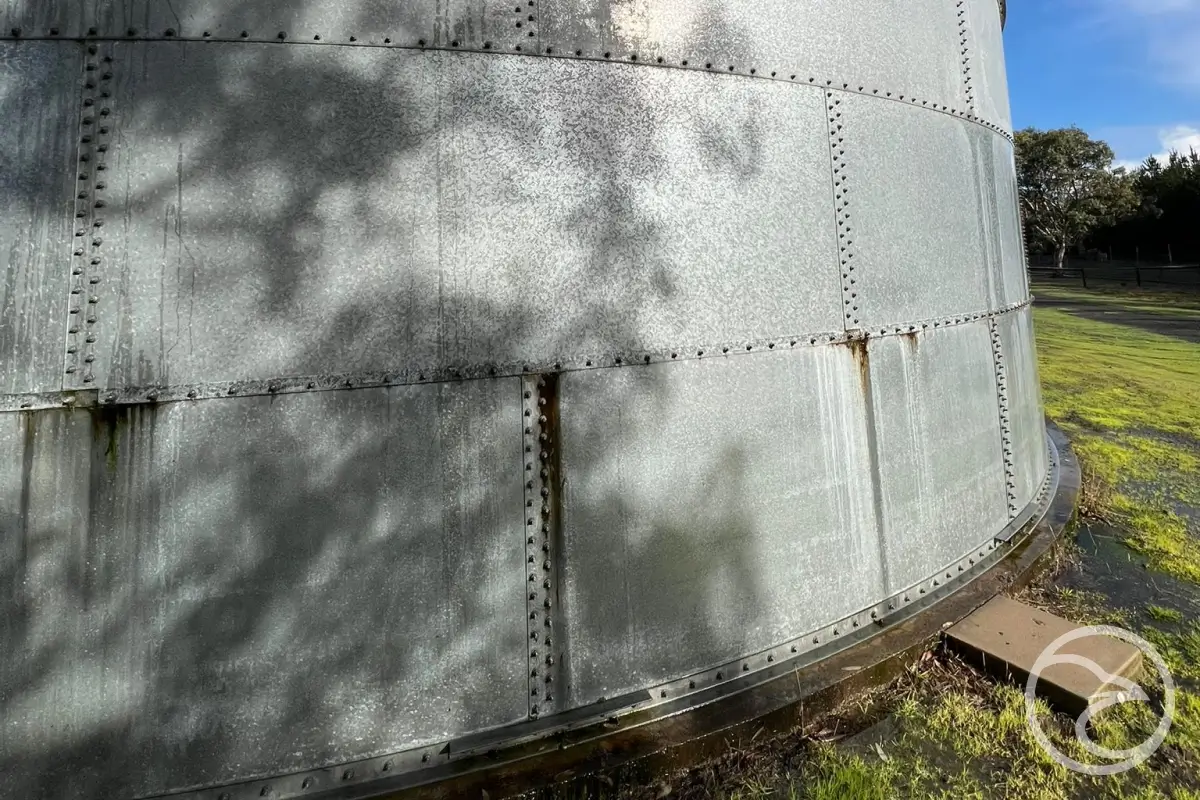
Metal sectional tanks may experience corrosion around joints, fasteners, and damaged protective coatings. Moisture retention and environmental exposure can contribute to deterioration.
Corrosion may affect the connection in several ways. It can damage fastening components, alter contact surfaces, or reduce the integrity of adjacent materials.
Potential warning signs include:
-
Rust staining.
-
Corroded bolt heads.
-
Deteriorated washers.
-
Damaged galvanised coatings.
-
Localised surface pitting.
-
Corrosion around panel edges.
The presence of surface corrosion does not always indicate immediate structural failure. However, progressive deterioration requires appropriate assessment.
5. Structural Movement and Foundation Settlement
Sectional tanks depend on suitable structural support. Uneven foundation settlement can introduce additional stresses into the tank structure.
These stresses may affect panel alignment and joint compression.
Potential contributing factors include:
-
Differential foundation settlement.
-
Inadequate support conditions.
-
Structural deformation.
-
Changes in loading.
-
Deterioration of supporting components.
Joint leaks associated with structural movement require more than localised sealing repairs. The underlying support problem must be investigated.
Otherwise, leakage may return after temporary repairs.
6. Installation Defects
Some joint leaks originate from installation problems. Incorrect gasket positioning, unsuitable fasteners, or inconsistent assembly procedures can compromise watertightness.
Examples include:
-
Gaskets installed incorrectly.
-
Contaminated sealing surfaces.
-
Missing fastening components.
-
Incorrect bolt tightening sequences.
-
Incompatible sealing materials.
-
Damaged panel edges.
These defects may become apparent during initial filling. Others may only emerge after repeated operating cycles.
7. Repeated Filling and Emptying
Water tanks experience changing hydraulic loads as their water levels fluctuate. Normal tank operation should be considered during engineering design.
However, repeated loading can expose existing weaknesses in joints or supporting components. The significance depends on tank construction, operating conditions, and structural integrity.
Frequent water level changes do not automatically cause joint failure. They may contribute to leakage where connections are already compromised.
What are the Warning Signs of Leaking Panel Joints?
Sectional tank leaks are not always immediately obvious. Some develop slowly and create subtle changes around the tank exterior.
Regular inspections help identify deterioration before conditions worsen.
Visible Water Around Panel Connections
Water appearing along a vertical or horizontal panel connection may indicate leakage. However, condensation, rainfall, and nearby plumbing leaks can create similar symptoms.
Inspectors should establish the actual moisture source before recommending repairs.
Persistent Damp Patches
Damp patches around joints may indicate slow water escape. These patches can remain visible even when active dripping is difficult to observe.
Persistent moisture may also contribute to corrosion or deterioration of surrounding materials.
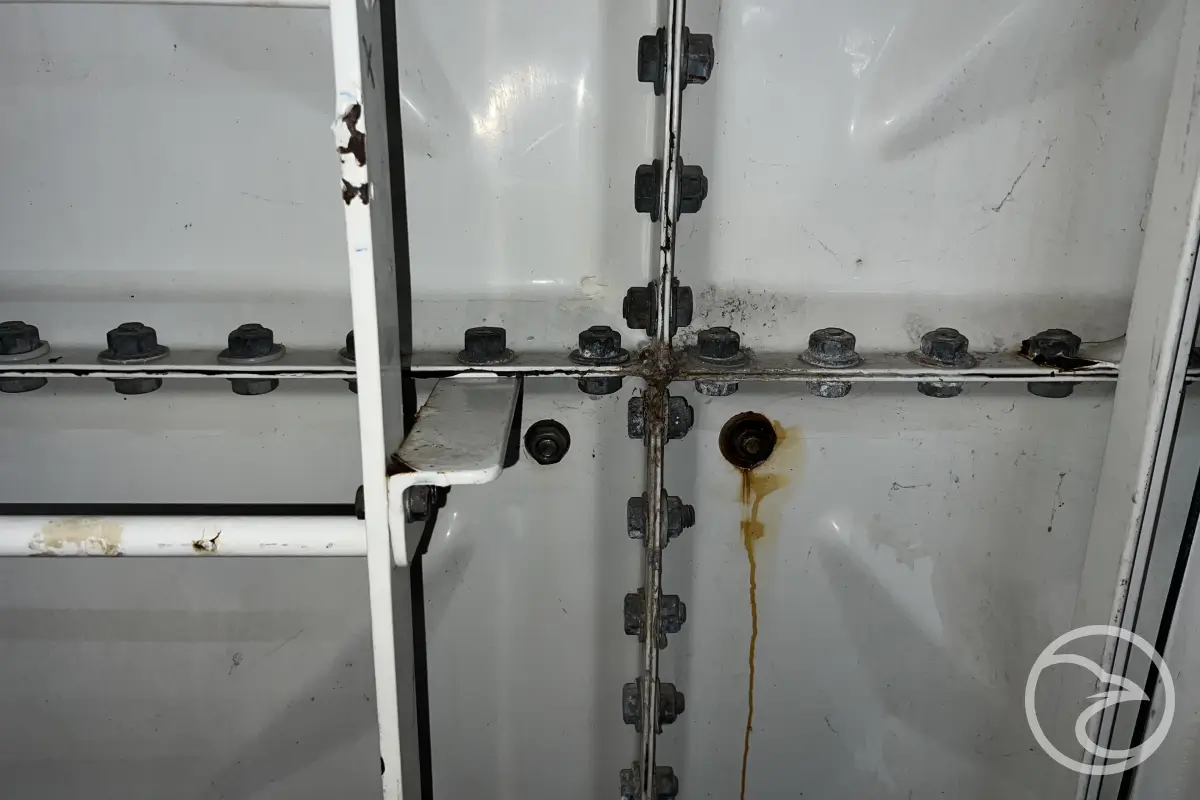
Rust Stains Around Bolts
Rust staining near fasteners can indicate corrosion. It may also reveal locations where water repeatedly accumulates.
However, rust staining alone does not confirm that a joint is leaking. Further assessment is necessary.
Mineral Deposits
Water escaping through small openings may leave mineral deposits after evaporation. White or discoloured residue can appear around joints or fasteners.
The appearance depends on water composition and surrounding materials. These deposits may help identify suspected leakage pathways.
Unexplained Water Loss
Unexpected reductions in stored water levels may indicate leakage. However, water consumption, overflow arrangements, and connected equipment must also be considered.
Monitoring water levels can help determine whether losses require investigation.
Panel Distortion
Visible panel deformation can indicate structural concerns.
Potential signs include:
-
Bulging panels.
-
Uneven joint gaps.
-
Misaligned connections.
-
Distorted fastening areas.
-
Changes in tank geometry.
Structural distortion should receive professional attention. Localised sealing repairs may be inappropriate until the underlying condition is assessed.
How are Sectional Water Tank Joint Leaks Inspected?
Effective inspection involves identifying both the leakage location and its underlying cause. A visual assessment may reveal obvious defects.
However, some problems require closer examination or specialist testing.
External Visual Inspection
External inspections can identify accessible signs of deterioration.
Inspectors may examine:
-
Panel joint surfaces.
-
Fasteners and washers.
-
Corrosion patterns.
-
Water staining.
-
Structural supports.
-
Visible panel deformation.
-
Foundation conditions.
Inspection findings should be documented. Photographs and condition records can support future maintenance planning.
Internal Tank Inspection
Some joint defects are more visible from inside the tank. Internal inspections may identify gasket displacement, damaged surfaces, or corrosion near connections.
However, internal access presents important safety considerations. Water tanks may be classified as confined spaces depending on their configuration and conditions.
Entry must follow applicable safety requirements and procedures.
Inspection without Draining the Tank
Certain tank conditions can be assessed without completely draining the stored water. Depending on the tank configuration, underwater inspection equipment may provide useful visual information.
Remotely operated vehicles can examine accessible internal surfaces. However, underwater inspections have limitations.
Water clarity, lighting, geometry, and equipment capabilities affect the findings. Visual inspection cannot always confirm hidden gasket defects or joint compression.
Leak Investigation and Testing
Additional investigation may be necessary when the source remains uncertain. Appropriate methods depend on the tank design and operating requirements.
The assessment may involve:
-
Reviewing maintenance records.
-
Examining suspected joint locations.
-
Monitoring water levels.
-
Assessing structural movement.
-
Inspecting accessible fasteners.
-
Evaluating gasket condition.
Testing should follow suitable procedures and manufacturer guidance. Uncontrolled pressure testing or inappropriate joint manipulation can create additional risks.
Can Sectional Water Tank Joint Leaks be Repaired?
Many sectional water tank joint leaks can be repaired. However, the appropriate method depends on the condition of the connection and surrounding structure.
Some leaks require relatively localised maintenance. Others indicate wider deterioration that may justify refurbishment or replacement.
Gasket Replacement
Gasket replacement may be suitable when sealing materials have deteriorated. The repair generally requires access to the affected joint.
Depending on tank design, this may involve partial disassembly. Replacement materials must meet relevant compatibility and performance requirements.
Correct gasket positioning and compression are essential. A replacement gasket will not necessarily resolve leakage caused by structural movement.
Fastener Replacement
Damaged or corroded fastening components may require replacement. Suitable replacement hardware should match the tank manufacturer’s specifications.
Material compatibility and fastening requirements must be considered. Replacing isolated bolts without assessing the complete joint can leave underlying problems unresolved.
Joint Resealing
Some tank systems allow approved joint resealing methods. The suitability depends on the original joint design and sealing materials.
Surface preparation is important. Contaminated or deteriorated surfaces may prevent reliable adhesion.
Not every sealant is appropriate for continuous water immersion. Potable water applications may also require materials suitable for drinking water contact.
Panel Repairs
Damaged panel edges or localised defects may require specialist repairs. The available methods depend on the panel material and structural condition.
Repairs must preserve the tank’s intended performance. Severely damaged panels may require replacement.
Structural Corrections
Joint leakage caused by foundation movement or structural distortion requires broader investigation. Possible corrective work may involve supports, foundations, or affected structural components.
Such work should be assessed by appropriately qualified professionals. Simply applying sealant over a moving joint may provide little lasting benefit.
Understanding different water tank repair methods helps facility managers assess suitable solutions for leaks, corrosion, and structural deterioration.
Gasket Replacement vs Panel Replacement
Not every leaking joint requires a new tank panel. The decision depends on whether the problem affects sealing components or the panel structure itself.
| Assessment factor | Gasket replacement | Panel replacement |
|---|---|---|
| Deteriorated gasket | Often relevant | Usually unnecessary if panels remain sound |
| Damaged sealing surface | May be insufficient | May be required |
| Severe panel corrosion | Does not address structural damage | May be appropriate |
| Panel distortion | May not resolve leakage | Requires structural assessment |
| Incorrect gasket material | Suitable replacement may resolve the issue | Usually not required |
| Structural movement | Root cause must be corrected | Depends on resulting damage |
A professional assessment helps determine the most appropriate approach. Replacing panels unnecessarily can increase project costs.
However, repairing gaskets alone may be ineffective when structural components are compromised.
Why do Some Tank Joint Leaks Return after Repair?
Recurring leaks can indicate that the original repair did not address the underlying problem. This is particularly relevant when leakage develops repeatedly at the same connection.
The Root Cause was not Identified
A repair may stop visible leakage temporarily without resolving its cause. For example, resealing a joint may not correct panel misalignment.
Water may eventually escape through the same connection.
Incorrect Replacement Materials
Sealing materials must suit the intended operating environment. Incompatible materials may deteriorate prematurely.
The wrong gasket thickness or profile can also affect compression.
Inadequate Surface Preparation
Joint repairs require suitable contact surfaces. Corrosion, debris, or old sealing material may interfere with effective installation.
Preparation requirements depend on the repair method.
Structural Movement Continues
A moving tank structure can repeatedly disturb repaired connections. Where foundation settlement or deformation remains unresolved, leakage may return.
Structural assessment should precede permanent repairs in these circumstances.
Repairs Were Too Limited
Multiple joints may deteriorate under similar conditions. Repairing only the most visible leak may leave other vulnerable connections untreated.
A broader condition assessment can help identify related defects.
When is Sectional Tank Refurbishment Necessary?
Localised repairs may be suitable for isolated joint defects. However, widespread deterioration can make a broader refurbishment programme more appropriate.
Tank refurbishment may involve repairing or replacing multiple components. The scope depends on the tank’s condition and operational requirements.
Signs That Broader Refurbishment may be Needed
Potential indicators include:
-
Leakage across multiple panel joints.
-
Extensive gasket deterioration.
-
Widespread fastener corrosion.
-
Repeated unsuccessful repairs.
-
Damaged protective coatings.
-
Structural defects affecting several panels.
-
Deterioration of internal surfaces.
These conditions do not automatically mean the tank must be replaced. However, they justify a more comprehensive assessment.
What does Sectional Tank Refurbishment Involve?
A refurbishment programme may include:
-
Assessing the tank’s structural condition.
-
Identifying leaking or deteriorated connections.
-
Reviewing panel and fastener condition.
-
Selecting suitable repair materials.
-
Replacing damaged components.
-
Restoring appropriate sealing arrangements.
-
Conducting relevant post-repair checks.
-
Documenting completed work.
The actual scope depends on tank construction and project requirements. Professional tank refurbishment can help restore serviceability where the existing structure remains suitable for continued use.
Refurbishment vs Complete Tank Replacement
Complete replacement may be necessary when damage is extensive or the tank no longer meets operational requirements. However, refurbishment may remain practical when most structural components are serviceable.
Factors influencing the decision include:
-
Structural integrity.
-
Extent of corrosion.
-
Availability of replacement parts.
-
Repair accessibility.
-
Operational downtime.
-
Expected remaining service life.
-
Project costs.
-
Applicable compliance requirements.
A condition-based assessment is more reliable than selecting replacement solely because of tank age.
Learn when to refurbish or replace a water tank based on structural condition, repair costs, and long-term performance.
How to Prevent Sectional Water Tank Joint Leaks
Preventive maintenance helps identify deterioration before leakage becomes severe. A suitable programme should reflect the tank’s design, operating conditions, and applicable requirements.
Inspect Panel Joints Regularly
Routine inspections should include accessible panel connections. Inspectors can look for moisture, corrosion, staining, and visible distortion.
Findings should be recorded for comparison.
Monitor Fastener Condition
Fasteners should be examined for visible deterioration or damage. However, routine bolt tightening should not occur without appropriate procedures.
Incorrect tightening can compromise gasket compression or damage tank components.
Check for Structural Movement
Changes in foundation or support conditions can affect joint performance. Visible distortion, settlement, or unusual movement should be investigated.
Early assessment may prevent additional damage.
Maintain Protective Coatings
Protective coatings help reduce corrosion risks on certain tank materials. Damaged coatings should be assessed and repaired using suitable methods.
Coating selection depends on substrate material and exposure conditions.
Manage Water Quality
Water chemistry can influence corrosion and material deterioration. Relevant factors may include pH, dissolved substances, and treatment chemicals.
Material selection and maintenance should reflect the intended water application.
Address Small Leaks Promptly
Minor leakage should not be ignored. Persistent moisture can contribute to surrounding deterioration.
Early investigation may help prevent more extensive repairs.
Maintain Inspection Records
Maintenance records support long-term asset management.
Useful information includes:
-
Inspection dates.
-
Identified leakage locations.
-
Gasket condition.
-
Corrosion observations.
-
Repair history.
-
Water level trends.
-
Structural concerns.
-
Recommended corrective actions.
Consistent records help identify recurring defects.
Special Considerations for Fire Water Storage Tanks
Sectional tanks are commonly used in fire protection water storage applications. These systems may have additional operational and compliance requirements.
A leaking fire water tank can affect stored water availability. However, the consequences depend on leakage severity, reserve capacity, and system configuration.
Maintaining Required Water Availability
Fire protection systems depend on adequate water supplies. Uncontrolled leakage can reduce available storage.
Tank operators should investigate water losses and assess their implications for system readiness.
Planning Repairs Around Operational Requirements
Fire water tank repairs may require temporary changes to system availability. These activities should be carefully planned.
Relevant stakeholders may include facility managers, fire protection contractors, and other responsible parties. Impairment management procedures may be necessary.
Inspection and Maintenance Requirements
Australian fire protection systems may be subject to relevant standards and maintenance obligations. AS 1851 is an important reference for routine servicing of fire protection systems and equipment.
Its application depends on the installation and relevant regulatory framework. Inspection and repair work should follow applicable requirements.
Sectional Water Tank Maintenance
Commercial and industrial tanks operate under varied environmental conditions. Exposure conditions depend on installation location, surrounding activities, and tank construction.
Coastal Exposure
Some Sydney installations experience airborne salt exposure. This can influence corrosion risks for exposed metal components.
Protective coatings and suitable material selection are important considerations.
Industrial Environments
Industrial sites may expose tank components to airborne contaminants or demanding operating conditions.
Maintenance programmes should reflect these local conditions.
Restricted Access Locations
Some sectional tanks are installed inside buildings or constrained plant areas. Limited access can complicate inspection and repair work.
Repair planning should account for safe access and operational restrictions.
Professional Condition Assessments
A professional assessment can help distinguish isolated joint defects from broader structural deterioration. This supports more informed repair decisions.
It can also help determine whether targeted maintenance or refurbishment is appropriate.
Conclusion
Sectional water tank joint leaks can develop for several reasons. Gasket deterioration, fastening defects, panel misalignment, corrosion, and structural movement are important potential causes. Although some leaks appear minor, persistent water escape may indicate wider deterioration.
Effective repairs begin with identifying the underlying problem. Gasket replacement, fastener repairs, joint resealing, and panel replacement may be suitable in different circumstances.
However, localised repairs cannot always resolve structural defects or widespread component deterioration. Regular inspections help identify warning signs before leakage becomes more severe.
Where multiple joints are affected, professional tank refurbishment may provide a more comprehensive solution. Maintaining sound panel connections supports reliable water storage and helps extend the service life of sectional tanks.