Tank liners create a protective barrier between stored contents and the tank structure. However, not every tank liner material performs the same way. Different materials provide different levels of flexibility, strength, and chemical resistance.
The correct material depends on the stored liquid and operating conditions. Tank construction, temperature, exposure, and intended use also matter.
PVC and polyethylene materials are commonly associated with tank lining applications. Other specialised membranes may suit more demanding storage environments.
Understanding these differences helps explain why liner selection should consider more than material name alone. This guide explains common tank liner materials, their properties, applications, and important selection factors.
What is a Tank Liner Material?
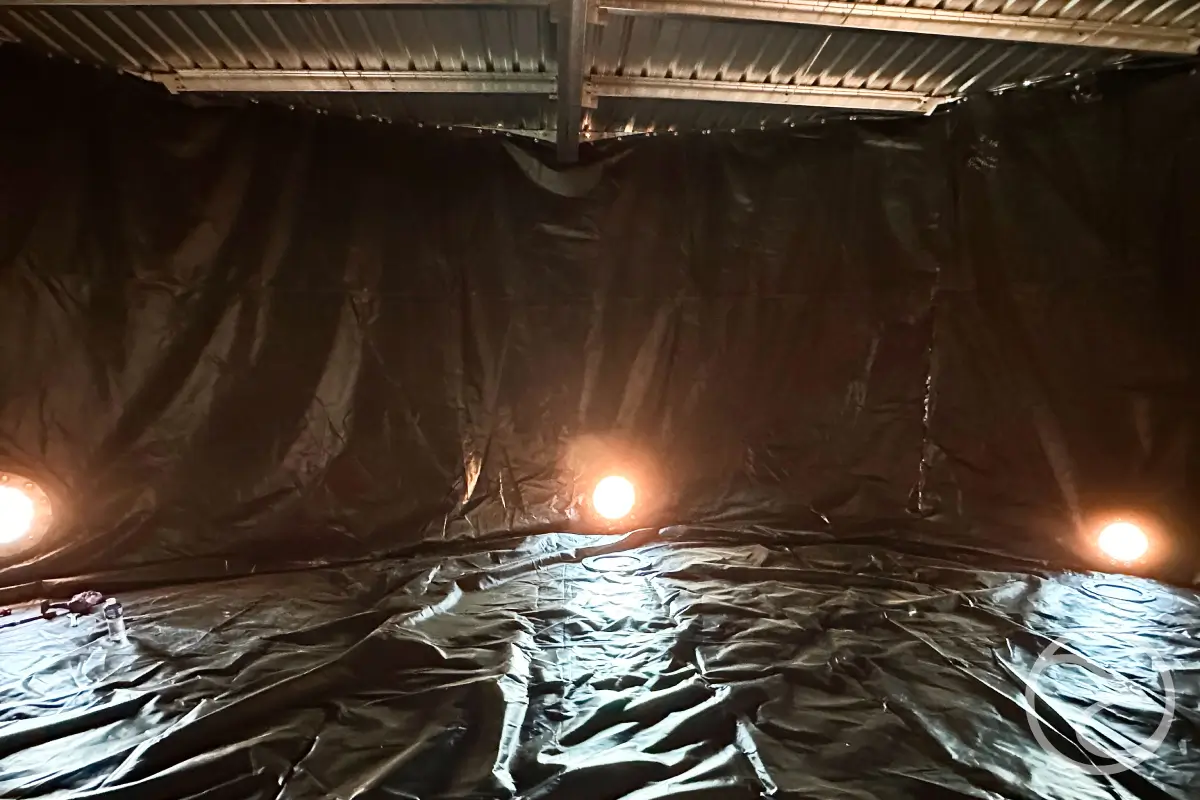
A tank liner material is a membrane installed inside a tank or containment structure. It creates a separate barrier for stored liquids. The liner can help prevent direct contact between the liquid and the structural tank surface. This function can support containment and tank protection.
Tank liners may be flexible or relatively rigid, depending on their material and design. Their properties can also vary between different formulations.
A liner may be installed within new or existing tanks. However, suitability depends on tank design, condition, and intended application. The term tank lining material should not be confused with the structural tank material.
For example, a steel tank may contain a flexible polymer liner. The steel provides structural support, while the liner provides containment.
This distinction becomes important when comparing tank construction and lining options.
Why Does Tank Liner Material Matter?
Material selection affects how a liner behaves throughout its service life. A suitable liner must remain compatible with the liquid it contains. It must also tolerate expected environmental and operational conditions.
Important properties can include:
- Chemical compatibility with the stored liquid
- Resistance to punctures, tears, and abrasion
- Flexibility during installation and operation
- Resistance to expected temperatures
- Suitability for prolonged water contact
- Resistance to ultraviolet exposure when required
- Ability to accommodate the tank geometry
- Appropriate performance around seams and penetrations
These factors can vary significantly between liner materials. A material suitable for water storage may not suit aggressive chemical storage.
Likewise, one chemical-resistant membrane may not suit every chemical. The application should therefore guide material selection.
Common Types of Tank Liner Materials
Several polymer materials can be used for liquid containment. PVC, HDPE, and LLDPE are among the commonly recognised options. Each material has distinct physical properties.
Understanding those differences provides a useful starting point when assessing a tank liner.
PVC Tank Liners
Polyvinyl chloride, or PVC, is a flexible thermoplastic material. Various PVC formulations are used across containment and lining applications.
PVC can be manufactured as flexible sheeting suitable for fabricated liners. Plasticisers are commonly used to provide the required flexibility.
That flexibility can help the liner conform to tank walls, floors, corners, and other structural features. PVC liners can also be fabricated into different shapes and dimensions. This characteristic makes them suitable for many customised containment applications.
A PVC tank liner may be considered for certain water storage and general containment applications. However, the specific PVC formulation remains important.
Chemical resistance can vary according to the substance, concentration, and operating temperature. PVC should therefore never be selected using the material name alone.
The complete specification must suit the intended contents and operating environment. Explore PVC tank liners designed for flexible and reliable containment across a range of liquid storage applications.
HDPE Tank Liners
High-density polyethylene, commonly called HDPE, is another widely recognised containment material. HDPE has a relatively high strength-to-density ratio and good resistance to many chemicals. It is widely used in geomembrane and containment applications.
Compared with flexible PVC, HDPE is generally stiffer. This difference influences fabrication, installation, and its ability to conform around complex features.
An HDPE tank liner may suit applications requiring strong chemical resistance or durable containment. HDPE is also associated with water containment applications. Searches such as HDPE lining for water tank reflect this common use.
However, material compatibility still requires assessment for the specific application. Tank shape and substrate condition can also affect whether HDPE is appropriate.
Installation requirements are another consideration. HDPE membrane systems commonly depend on properly formed and joined seams. These factors make material specification and installation quality closely connected.
LLDPE Tank Liners
Linear low-density polyethylene, or LLDPE, is another polyethylene material used for containment membranes. LLDPE generally offers greater flexibility than HDPE. This flexibility can help where the membrane must accommodate irregular surfaces or movement.
The material can provide useful puncture and elongation characteristics. These properties can be valuable in certain containment environments. However, LLDPE and HDPE should not be treated as interchangeable materials.
Their mechanical properties and installation characteristics differ. The correct choice depends on the tank configuration and service conditions.
Reinforced and Specialised Liner Materials
Some applications require membranes with reinforcement or specialised formulations. A reinforced liner can incorporate a supporting fabric within the membrane structure. This construction can increase dimensional stability and mechanical strength.
Specialised formulations may also target particular operating conditions. These can include chemical exposure, outdoor environments, demanding temperatures, or specific containment requirements.
The generic material family still does not provide the complete specification. Thickness, reinforcement, formulation, manufacturing method, and certification can all affect suitability.
How do Tank Liner Materials Compare?
There is no single tank liner material that performs best in every application. Each option has different characteristics.
| Material | General Characteristics | Typical Considerations | Possible Applications |
|---|---|---|---|
| PVC | Flexible and adaptable | Formulation and chemical compatibility | Water and general liquid containment |
| HDPE | Strong and relatively stiff | Installation, seams, and tank geometry | Water and chemical containment |
| LLDPE | Flexible with good elongation | Application-specific compatibility | Flexible containment systems |
| Reinforced membranes | Added structural reinforcement | Membrane construction and specification | Demanding or specialised containment |
This comparison provides only a general overview. Actual performance depends on the individual product specification. Conditions inside and outside the tank must also be considered.
Material selection should therefore start with the application rather than a preferred polymer.
How Does the Stored Liquid Affect Material Selection?
The stored liquid is one of the most important factors when choosing a tank liner. Different liquids interact with polymers differently.
Water storage presents different requirements from chemical storage. Fire water and agricultural applications may introduce additional considerations. Understanding the intended contents helps narrow the available material options.
Water Storage
Water tanks can serve many different purposes. They may hold drinking water, process water, rainwater, irrigation water, or other supplies. The intended water use influences liner requirements.
For example, drinking water applications can require materials approved for contact with potable water. The water itself can also contain treatment chemicals or other substances. Their concentrations may affect material compatibility. Temperature should also be considered.
A liner designed for ordinary ambient conditions may behave differently under sustained elevated temperatures. The tank environment therefore remains important even when the stored liquid appears straightforward.
Fire Water Storage
Fire water tanks hold a dedicated water supply for fire protection systems. A fire tank liner must support the tank’s intended containment function. The material should suit the tank configuration and stored water.
Commercial fire water tanks may remain filled for long periods. Their liners therefore need appropriate long-term performance characteristics. A commercial fire water tank liner should not be selected using flexibility or thickness alone.
The complete system and applicable requirements should be considered. Tank condition also matters when lining an existing fire water tank.
Corrosion, sharp surfaces, damaged components, or substrate irregularities may require attention before installation. These issues concern the complete lining system rather than only the membrane material.
For dedicated fire water storage, fire tank liners provide reliable containment for tanks used in fire protection systems.
Chemical Storage
Chemical storage requires particularly careful material selection. A polymer can resist one substance while performing poorly with another. Concentration can also change compatibility. Temperature and exposure duration may further affect material performance.
A chemical storage basin liner therefore requires assessment against the actual chemicals being contained. General statements such as “chemical resistant” provide limited information. The specific chemical, concentration, temperature, and exposure conditions should be identified.
Compatibility information from the material manufacturer can then support the selection process. Mixed chemical environments may require additional assessment.
The liner must suit realistic operating conditions rather than an idealised storage scenario.
Agricultural Water Storage
Agricultural tanks may contain irrigation water, rainwater, or other liquids used around farming operations. Their operating environments can vary considerably.
Some tanks remain outdoors and experience changing temperatures. Others may face long periods of water storage or demanding site conditions. A durable agricultural tank liner must therefore suit both the contents and environment.
Outdoor exposure can make UV resistance relevant for exposed liner areas. Mechanical damage should also be considered during installation and ongoing operation.
The required material ultimately depends on how the tank will be used.
Explore our range of tank liners for water, industrial, agricultural, and other liquid storage applications.
What Makes a Tank Liner Material Durable?
Durability is not determined by polymer type alone. Two liners made from the same general material can have different performance characteristics.
Several factors influence durability.
Material Thickness
Thickness can affect puncture resistance, handling, and mechanical performance. However, a thicker membrane is not automatically suitable for every application.
Material formulation and construction remain equally important. The required thickness should reflect the intended service conditions and liner specification.
Tensile and Tear Properties
Tank liners can experience mechanical forces during installation and operation. The material must tolerate appropriate loads without unacceptable deformation or damage.
Tensile strength describes material behaviour under pulling forces. Tear resistance relates to its ability to resist propagation of a tear. These characteristics vary between materials and formulations.
Puncture Resistance
The tank substrate can contain irregularities capable of damaging a liner. Sharp edges, protrusions, debris, and poorly prepared surfaces can create localised stress.
Material puncture resistance is therefore important. However, good substrate preparation remains essential. A durable liner should not be expected to compensate for unsuitable installation conditions.
Chemical Resistance
Chemical exposure can affect the physical properties of some polymers. Changes may include swelling, softening, brittleness, or loss of mechanical performance.
The risk depends on the material and stored substance. This is why chemical compatibility should be assessed before selecting a lining material.
UV Resistance
Ultraviolet exposure can degrade some polymer materials over time. UV resistance becomes especially relevant when parts of the liner remain exposed to sunlight.
Not every internal liner receives significant UV exposure. The importance of this property therefore depends on tank design and operating conditions.
Seam Quality
The membrane itself is only one component of a lining system. Seams and joins can be critical areas.
Their performance depends on the liner material, fabrication process, and installation method. A strong membrane cannot compensate for unsuitable or poorly executed seams.
Does Tank Liner Thickness Matter?
Thickness is an important specification, but it should not be considered independently. A thicker liner can provide different mechanical properties from a thinner version of the same material. Yet comparing thickness across different polymers can be misleading.
PVC and HDPE have different physical characteristics. Equal thickness does not mean equal performance. The intended application should determine the required specification. Tank dimensions are another separate consideration.
Searches for PVC internal tank liner sizes can refer to the physical dimensions of fabricated liners. These dimensions must match the tank geometry. However, liner dimensions and membrane thickness describe completely different properties.
One determines physical fit. The other forms part of the material specification. Both need consideration during liner design.
Tank Material vs Tank Lining Material
The terms tank material and tank liner material describe different components of a storage system. The tank material forms the primary structure. Depending on the application, tanks may use steel, concrete, polymers, or other structural materials.
The lining material forms an internal containment barrier. For example, a steel tank can use a polymer liner. The steel shell provides structural integrity around the stored liquid. The liner separates that liquid from the internal steel surface.
This separation can be useful where the structural material and stored contents require an additional containment barrier. However, the liner does not necessarily replace the structural function of the tank.
Understanding this difference helps when evaluating an existing storage system. It also prevents confusion when comparing tank construction materials with lining membranes.
How to Choose a Suitable Tank Liner Material
Choosing a suitable tank liner material requires more than comparing PVC, HDPE, or other membrane types. The stored liquid, tank structure, and operating environment can all influence material requirements.
Consider the Stored Liquid
Start with the liquid the tank will contain. Water, chemicals, process liquids, and agricultural liquids can have different material requirements.
Also consider additives, treatment chemicals, and possible contaminants.
Check Chemical Compatibility
The liner material must be compatible with the stored liquid. Compatibility can depend on chemical type, concentration, temperature, and exposure duration.
A material suitable for one chemical may not suit another.
Identify Water Quality Requirements
Water storage applications can have additional material requirements. Potable water tanks may require liners approved for contact with drinking water.
Other water applications may have different requirements.
Consider Operating Temperature
Temperature can affect the behaviour and service life of liner materials. Consider both the stored liquid temperature and the surrounding environment.
Temperature changes may also affect material flexibility and movement.
Assess the Existing Tank Material
The tank substrate can influence liner selection and installation. Steel, concrete, and other surfaces have different preparation requirements.
Existing corrosion, rough areas, or surface damage should also be considered.
Consider Tank Size and Shape
Tank geometry can influence which liner materials are practical. Corners, penetrations, internal structures, and irregular shapes can make installation more complex.
More flexible materials may better accommodate certain configurations.
Evaluate UV Exposure
UV resistance matters when liner material can be exposed to sunlight. This may occur around tank openings or other exposed areas.
Fully enclosed internal liners may have different exposure conditions.
Consider Mechanical Demands
A liner can experience mechanical stresses during installation and use. These may include abrasion, punctures, stretching, or movement.
Material properties should reflect the expected conditions.
Check Applicable Standards and Approvals
Some storage applications have specific regulatory or material requirements. These can depend on the stored liquid, tank purpose, and location.
Required certifications or approvals should be identified before selecting the liner.
Understanding Tank Liner Materials Before Selection
Tank liner material selection involves more than choosing between PVC and HDPE. The stored liquid should guide the initial assessment. Tank construction and operating conditions should then narrow the suitable options.
PVC offers flexibility that can benefit many fabricated liner applications. HDPE provides different mechanical and chemical resistance characteristics. LLDPE and reinforced membranes provide additional options for particular environments.
Thickness, temperature, UV exposure, chemical compatibility, and substrate condition can also influence liner performance. Most importantly, the structural tank material and tank lining material should be considered separately.
The tank provides the main structure, while the liner performs a specific containment role.
Understanding these differences makes tank liner specifications easier to evaluate. It also helps match material properties with real storage conditions.