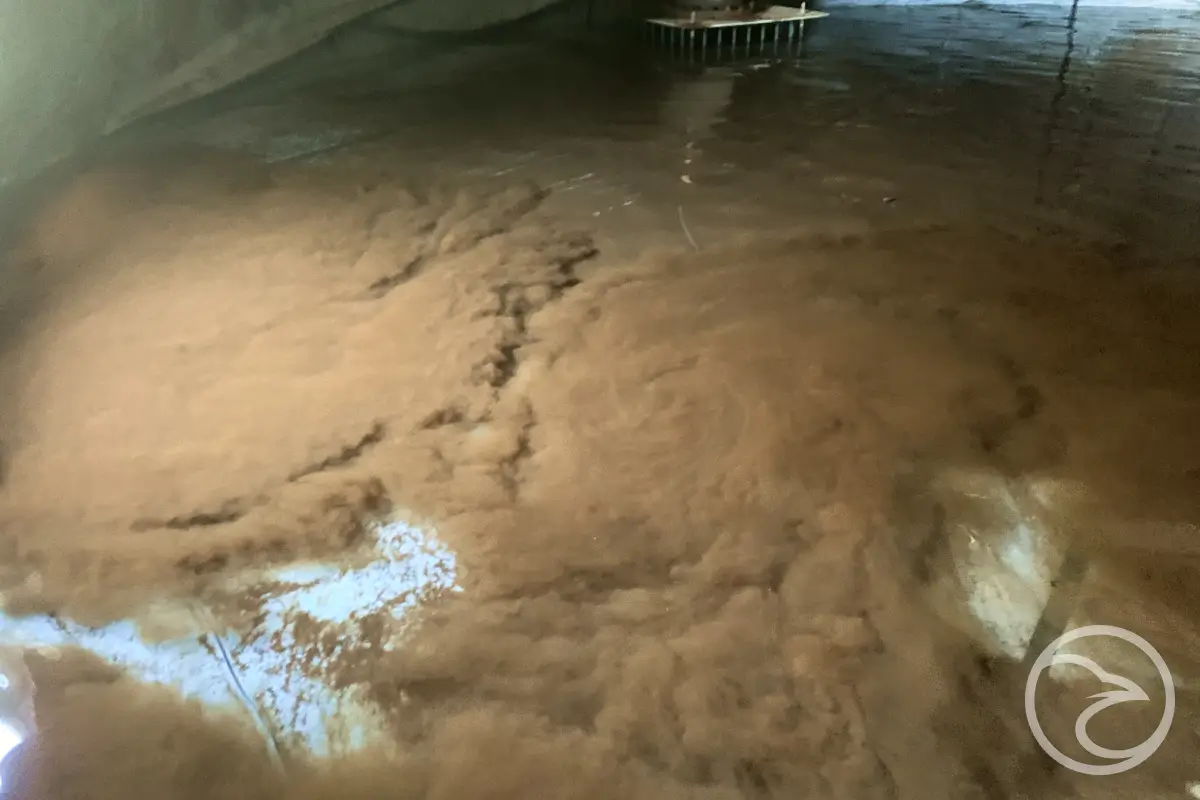
Fire water tanks are designed to provide a reliable stored water supply when it is needed. However, the condition of the water inside the tank can change over time.
Sediment, rust particles, mineral deposits, coating fragments, and other debris can gradually collect inside a fire tank. Much of this material settles on the tank floor, where it may remain unnoticed between inspections.
A small amount of sediment does not automatically indicate a serious tank problem. However, increasing or unusual deposits can make inspection more difficult. They may also provide useful clues about corrosion, coating deterioration, water quality, or other changes inside the tank.
For this reason, fire tank sediment should be considered as part of a broader inspection and maintenance program.
This guide explains why sediment develops, how it can affect a fire water tank, how it is identified, when removal may be necessary, and what can be done to reduce future accumulation.
What is Sediment in a Fire Water Tank?
Sediment is material that settles out of stored water and collects inside the tank. Because many fire water tanks hold water for long periods, suspended particles can gradually settle to the bottom.
The material found in a tank can vary considerably.
It may include:
- fine dirt and silt;
- rust particles;
- mineral deposits;
- corrosion products;
- coating fragments;
- organic material;
- debris entering with incoming water;
- material from deteriorating internal components.
Sediment should not always be treated as one uniform material. Its appearance, location, depth, and composition can provide information about what is happening inside the tank.
For example, a layer of fine material introduced with incoming water may have a different significance from large quantities of rust scale. Understanding what is present is therefore more useful than simply recording that the tank contains sediment.
Why Does Sediment Build up in Fire Water Tanks?
Sediment can enter or develop inside a tank in several ways. Some accumulation may occur gradually during normal operation. Other deposits can indicate deterioration within the tank itself.
Sediment Entering with the Water Supply
Incoming water can contain small suspended particles. These may remain in the water temporarily before settling as water movement decreases.
The amount of material introduced depends partly on the source and quality of the incoming water. Over many filling cycles, relatively small amounts can create a noticeable layer on the tank floor.
Internal Corrosion
Corrosion can contribute directly to sediment. As steel surfaces deteriorate, corrosion products and rust scale may separate from the material and settle elsewhere in the tank.
Finding substantial quantities of rust-coloured sediment should therefore prompt consideration of the internal tank condition. The sediment itself is only one part of the issue. The source of that material may require investigation.
Deteriorating Coatings
Protective coatings can deteriorate with age, moisture exposure, surface movement, or previous damage. Loose coating material may eventually separate from the surface and fall to the bottom of the tank.
Fragments in the sediment can therefore provide an indication that internal protective systems need closer assessment.
Long Periods of Low Water Movement
Fire water tanks may hold relatively static water for extended periods. Without regular water movement, suspended material has time to settle.
Over time, deposits can gradually become deeper even when there is no single major contamination event.
External Debris
Poorly protected openings may allow external material to enter a tank. The potential entry points depend on tank design but can include hatches, vents, damaged roof components, or other openings.
This is one reason the condition of the entire tank should be considered when unusual internal debris is discovered.
Does Stored Fire Water Quality Change Over Time?
Water stored for long periods can change in appearance and condition. This does not mean fire water should be assessed using exactly the same criteria as potable water. The intended use is different. However, visible changes can still provide useful information about tank condition.
Inspectors or facility managers may observe:
- discoloration;
- cloudiness;
- suspended particles;
- rust-coloured water;
- deposits;
- unusual debris;
- biological material where conditions allow it to develop.
The cause should be considered rather than relying on appearance alone. For example, brown or reddish water may be associated with corrosion products, but visual appearance by itself cannot establish the exact source.
Likewise, clear water does not prove that the tank floor, liner, or structural components are in good condition. Water condition is therefore one part of a broader tank assessment.
Is Sediment in a Fire Tank a Problem?
The significance of sediment depends on how much is present, where it is located, and what it consists of. A thin layer of material is different from substantial deposits that have accumulated over many years.
Sediment can become relevant for several reasons. Sediment buildup is one of several condition issues that should be considered when inspecting and maintaining fire water tanks over their service life.
It Can Accumulate on the Tank Floor
Most heavier material eventually settles. As the layer grows, parts of the floor may become covered.
This can make it harder to see the actual condition of the surface beneath the sediment.
It Can Hide Corrosion or Coating Damage
A floor covered by deposits cannot always be properly assessed visually. Corrosion, coating failure, liner damage, or other defects may be hidden underneath.
Removing sediment can therefore reveal conditions that were previously difficult to observe.
It Can Accumulate Near Tank Components
Sediment distribution is not always even. Material can collect around internal components, low points, or other areas of the tank.
Particular attention may be required where accumulation approaches outlets or other important components.
It May Indicate Another Problem
Sometimes the most important issue is not the sediment itself. Large quantities of corrosion products, for example, can indicate deterioration somewhere within the tank.
Coating fragments may point towards coating failure. The question should therefore be:
Where did this material come from?
That often provides more useful information than simply measuring how much sediment is present.
Can Sediment Contribute to Tank Corrosion?
Sediment and corrosion can be related in several ways. First, corrosion can create sediment. Rust scale and corrosion products can separate from steel surfaces and settle on the floor. Second, deposits can make underlying surfaces harder to inspect and monitor.
Conditions beneath deposits may also differ from exposed areas of the tank. However, the presence of sediment should not automatically be described as proof of active corrosion.
The relationship needs to be assessed in the context of:
- tank material;
- coating condition;
- water chemistry;
- sediment composition;
- location of deposits;
- visible surface deterioration.
Where corrosion products are found in the sediment, the source should be investigated. Simply cleaning away the material without examining the tank may remove evidence of the underlying problem without addressing its cause.
What are the Signs of Sediment or Poor Water Condition?
Sediment may not be visible during routine external checks. However, several signs can indicate that internal assessment may be useful.
These include:
- visible deposits on the tank floor;
- cloudy or discoloured water;
- rust particles;
- sludge;
- coating fragments;
- unusual debris;
- deposits around accessible internal components;
- increasing sediment levels recorded during previous inspections;
- evidence of internal corrosion;
- recurring contamination.
Historical records are particularly valuable. If an inspection shows considerably more sediment than an earlier assessment, the change may deserve further investigation.
Likewise, a change in the type or colour of deposits can be important.
Can You Check a Fire Tank for Sediment Yourself?
Facility personnel can perform basic observations where this can be done safely. However, checking for sediment should not involve entering the tank without appropriate procedures. Fire water tanks can present confined-space and access hazards.
A basic visual check may include reviewing:
- accessible water condition;
- visible suspended particles;
- water discoloration;
- previous inspection photographs;
- previous sediment measurements;
- maintenance records;
- signs of external contamination entry.
Where there is a safely accessible inspection opening, some internal areas may be visible without tank entry. However, this provides only a limited view.
The absence of visible sediment near an opening does not mean that the entire tank floor is clear. Professional assessment may be needed when the internal condition cannot be adequately established from safe access points.
How is Sediment Identified During a Fire Tank Inspection?
A fire tank inspection provides an opportunity to assess both sediment and the components around it. The inspection method depends on tank design, access, water level, and operational requirements.
Visual Internal Inspection
Where internal access is appropriate, visual inspection can identify sediment distribution and other visible conditions.
Inspectors may look at:
- sediment depth;
- location of deposits;
- rust scale;
- coating fragments;
- debris;
- sludge;
- floor condition where visible;
- internal components.
The type of material can be just as important as its quantity.
Underwater or ROV Inspection
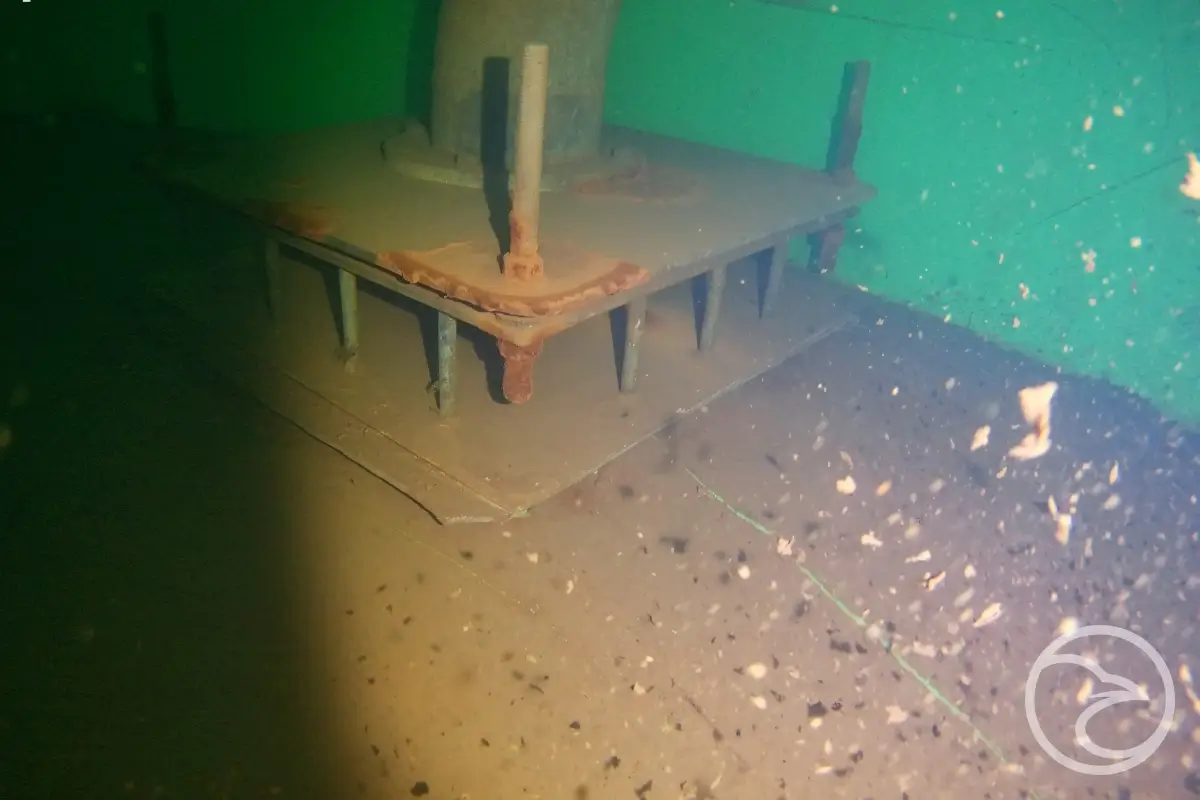
Some tanks can be assessed while remaining full. Where appropriate, an ROV or other underwater inspection method can provide visual information about submerged components and the tank floor.
This can help identify:
- sediment accumulation;
- internal corrosion;
- coating condition;
- structural components;
- liner condition;
- unusual debris.
The usefulness of underwater imagery can be affected by water clarity and the amount of sediment present. Heavy deposits may also obscure the surface beneath them.
Where draining the tank is not practical, ROV tank inspection can provide underwater visual access to sediment, internal surfaces, and submerged tank components while the tank remains filled.
Sediment Depth Assessment
Where sediment is present, its approximate depth and distribution may be documented. This provides a useful baseline for future inspections.
For example, records can show whether deposits remain relatively stable or continue to accumulate. The location should also be considered.
A large deposit near a tank outlet may have different implications from a similar amount in another area.
Water Condition Assessment
Visual water condition can also be documented. Cloudiness, colour, suspended particles, or unusual material may indicate that further investigation is appropriate.
Visual assessment alone does not determine water chemistry or identify every contaminant. Where specific water-quality information is required, appropriate sampling and testing may be necessary.
Why is the Tank Floor Important?
The floor is particularly relevant when discussing fire tank sediment because it is where much of the material eventually settles. Unfortunately, sediment can also make the floor difficult to assess.
A heavily covered floor may conceal:
- corrosion;
- coating deterioration;
- damaged surfaces;
- localised defects;
- liner damage;
- previous repairs.
This creates an important distinction between seeing the sediment and seeing the tank floor. An inspection may establish that deposits are present without being able to fully assess the material underneath them.
Where floor condition is important, sediment removal may therefore be required before a more complete assessment can be made.
Can Sediment Affect a Fire Tank Outlet?
The location and depth of sediment relative to the tank outlet should be considered. If substantial quantities accumulate around low-level components, the deposits may become more relevant to tank operation. This is one reason sediment should not simply be allowed to accumulate indefinitely.
Inspection records can help track whether the sediment level is changing and whether deposits are developing around important components.
Where significant accumulation is identified near an outlet, the appropriate maintenance response should be determined based on the tank configuration and inspection findings.
What can Sediment Reveal about Fire Tank Condition?
Sediment can sometimes act as a condition indicator. The material collected at the bottom of a tank may provide clues about deterioration occurring elsewhere.
Rust and Corrosion Products
Large amounts of rust-coloured material can indicate that steel components require closer inspection. The source may be the floor, walls, roof supports, connections, or other internal components.
Coating Fragments
Loose coating material can indicate deterioration of the protective system. The affected surface should be identified where possible.
Unusual Debris
Unexpected material may suggest that debris is entering through an opening or that an internal component is deteriorating.
Increasing Sediment Levels
Rapid or recurring accumulation can be more informative than a single measurement. If sediment returns quickly after removal, the water source or tank condition may require further investigation.
This is why cleaning records should be retained alongside inspection reports.
When Does a Fire Water Tank Need Sediment Removal?
There is no single sediment level that can be applied to every tank without considering its design and applicable requirements.
The need for removal can depend on:
- sediment depth;
- location of deposits;
- proximity to outlets;
- type of material;
- tank floor visibility;
- inspection findings;
- water condition;
- previous accumulation rates;
- maintenance requirements.
Removal may be appropriate where deposits prevent effective inspection of important surfaces. It may also be required where accumulation around tank components becomes a concern.
The decision should therefore be based on both the quantity of material and its effect on inspection, maintenance, and tank operation.
How is Sediment Removed from a Fire Water Tank?
The removal method depends on the tank, sediment condition, access, and operational requirements. For industrial and fire water tanks, this should be treated as a planned maintenance activity rather than a simple DIY cleaning task.
A typical process may involve several stages.
1. Assess the Tank Condition
The type, depth, and location of sediment should first be established where possible. This helps determine the appropriate removal method.
Existing corrosion, liner condition, and other known defects should also be considered.
2. Plan the Work
Planning may need to address:
- tank operation;
- fire protection requirements;
- isolation;
- access;
- confined-space controls where applicable;
- sediment removal equipment;
- disposal;
- inspection requirements.
The tank’s role within the fire protection system is particularly important when planning any activity that could affect availability.
3. Remove the Sediment
Deposits can then be removed using a method appropriate to the tank and operating conditions. The objective is to remove accumulated material without damaging the tank, liner, coatings, or internal components.
4. Assess Previously Covered Surfaces
This is an important step. Once sediment is removed, the newly exposed floor or liner should be checked where appropriate.
The cleaning process may reveal corrosion, coating deterioration, liner damage, or other defects that were previously hidden.
5. Document the Findings
Records should note what was removed and what was found underneath. Photographs can provide a useful baseline for future comparison.
If the sediment contained unusual material, that should also be recorded.
Where sediment, sludge, or debris has accumulated inside the tank, professional water tank cleaning can help remove deposits and provide clearer access to internal surfaces for further inspection.
Does a Fire Tank need to be Drained for Sediment Removal?
Not necessarily in every situation.
The appropriate method depends on:
- tank design;
- amount of sediment;
- water clarity;
- access;
- liner or coating system;
- required inspection scope;
- operational requirements;
- available cleaning method.
Some underwater work may be possible without completely draining the tank. Other situations may require dewatering to provide adequate access to the floor and internal components. The decision should be based on what needs to be achieved.
If the objective is only to remove accessible deposits, the requirements may differ from a project that also needs a detailed assessment of the floor or structural components.
For a broader overview of inspection, testing, and maintenance obligations, see our guide to fire tank compliance requirements.
Tank Liners, Coatings and Sediment
Sediment should also be considered when assessing internal liners and protective coatings. A layer of deposits can hide parts of these systems.
Once sediment is removed, inspectors may find:
- coating loss;
- blistering;
- peeling;
- punctures;
- damaged seams;
- liner wrinkles;
- deterioration around penetrations;
- previous repairs.
This is particularly relevant where the tank has experienced unexplained water loss or recurring maintenance issues.
The condition of the liner should therefore be considered alongside sediment rather than as a completely separate issue.
How Often Should Fire Tank Sediment be Checked?
There is no universal interval that suits every fire water tank.
The appropriate inspection and maintenance schedule depends on factors such as:
- applicable standards and requirements;
- tank age;
- tank construction;
- water source;
- previous sediment levels;
- corrosion history;
- coating or liner condition;
- previous inspection findings;
- maintenance history.
Historical information is particularly useful. A tank that repeatedly develops substantial sediment may require a different maintenance approach from one where deposits remain minimal over long periods.
Regular fire tank inspections can help track these changes and identify when sediment, corrosion, liner condition, or other internal issues require further attention.
How can Sediment Buildup Be Reduced?
It may not be possible to prevent all sediment from entering or developing inside a fire water tank. However, good condition management can reduce the risk of significant accumulation going unnoticed.
Useful measures include:
- carrying out scheduled inspections;
- monitoring sediment levels over time;
- investigating unusual water conditions;
- maintaining roof hatches and other openings;
- managing internal corrosion;
- maintaining protective coatings;
- monitoring liner condition;
- removing excessive deposits when required;
- keeping inspection and cleaning records.
The source should also be considered when unusual quantities of sediment appear. Repeated cleaning may provide only a temporary solution if corrosion, coating failure, or another condition continues producing debris.
Why Inspection Should Come Before Cleaning
It can be tempting to treat sediment simply as material that needs to be removed. However, cleaning without first considering the tank condition can mean valuable information is lost. The colour, location, depth, and type of deposits may provide clues about their source.
Inspection before and after removal can help answer two different questions:
Before cleaning: What has accumulated, and where might it have come from?
After cleaning: What condition is the surface underneath?
Together, these observations provide a much clearer picture than cleaning alone. They can also help determine whether further maintenance, corrosion treatment, liner work, or repair is necessary.
Fire Tank Sediment, Inspection and Long-Term Maintenance
Sediment should not be managed as an isolated housekeeping issue. Its presence can be connected to water source conditions, corrosion, coating deterioration, liner condition, tank openings, and the general age of the structure.
Inspection records can show whether accumulation is increasing and whether the same type of material continues to return. Cleaning records provide additional context.
When these records are considered together, facility managers can make better decisions about when intervention is necessary. The objective is not simply to keep the tank visually clean.
It is to understand whether the internal environment is changing and whether those changes indicate deterioration elsewhere in the system.
Key Takeaways
Sediment can gradually accumulate inside fire water tanks, particularly where stored water remains relatively static for long periods. The deposits may consist of silt, minerals, rust, coating fragments, organic material, or other debris.
A small amount of sediment does not automatically indicate a serious problem. However, increasing deposits can obscure the tank floor, make inspection more difficult, accumulate around internal components, or provide evidence of deterioration elsewhere.
Rust particles may point towards corrosion. Coating fragments can indicate protective-system deterioration. Recurring heavy sediment may justify investigation into both the tank and incoming water conditions.
Basic observations can help facility managers identify visible changes, but internal tank access should be managed appropriately. Professional inspection can establish the location and extent of sediment while assessing surrounding components, coatings, liners, and visible tank condition.
Where removal is required, the process should do more than clean the tank. The surfaces exposed after sediment removal should also be assessed for hidden deterioration.