Selecting the right water tank material is an important decision for any water storage project. The tank material can influence durability, maintenance requirements, corrosion resistance, and overall lifecycle costs.
Two of the most common options for commercial and industrial water storage are hot-dipped galvanised (HDG) steel and stainless steel.
Both materials offer proven performance across a wide range of applications. However, each has unique characteristics that may make it more suitable for specific environments and operational requirements.
Understanding the differences between HDG and stainless steel water tanks can help project owners make a more informed decision.
What are HDG Water Tanks?
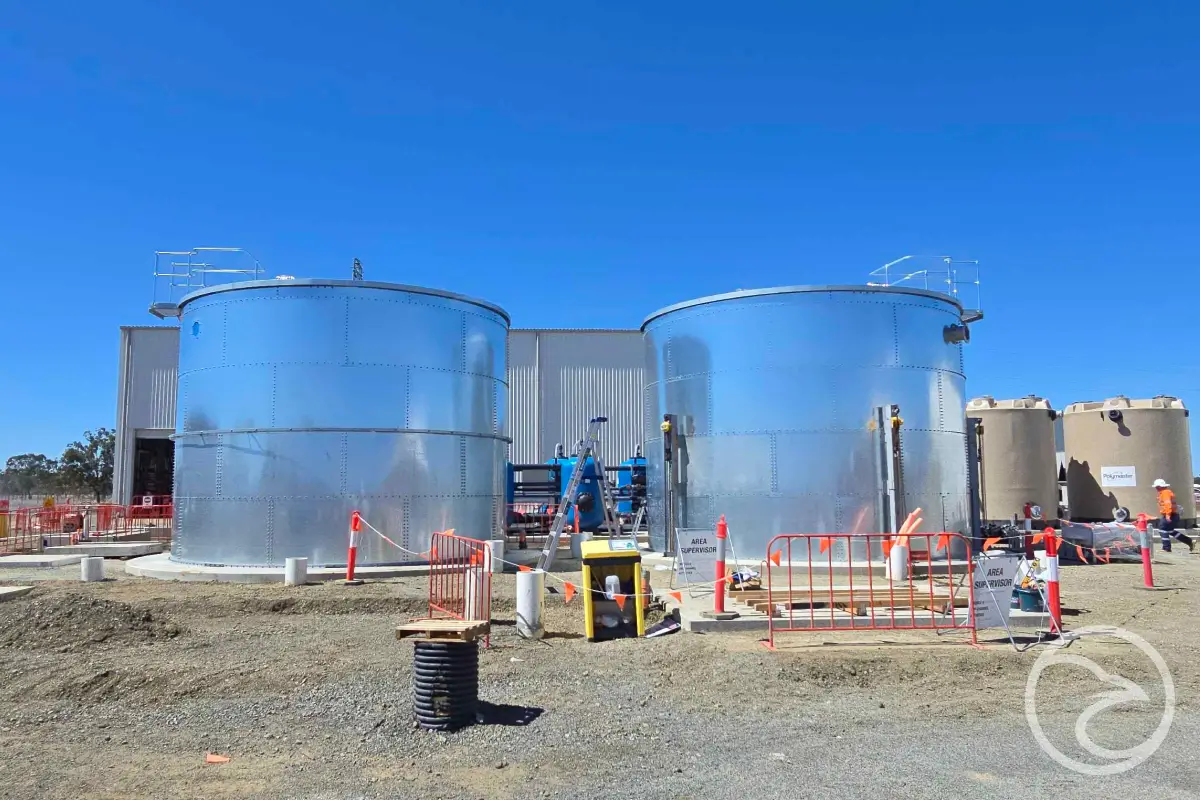
Hot-dipped galvanised steel tanks are manufactured using steel panels coated with a layer of zinc through a hot-dip galvanising process. The zinc coating acts as a protective barrier that helps reduce corrosion and extend the service life of the tank.
Many commercial and industrial facilities use hot-dipped galvanised tanks because they provide a balance between durability and cost-effectiveness.
Common applications include:
- Fire water storage
- Commercial buildings
- Industrial facilities
- Agricultural operations
- Municipal water systems
HDG tanks are often selected for projects where long-term performance and budget considerations are equally important.
What are Stainless Steel Water Tanks?
Stainless steel water tanks are manufactured using corrosion-resistant steel alloys that contain chromium and other elements.
Unlike galvanised steel, stainless steel does not rely on an external coating for corrosion protection. Instead, the material naturally forms a protective oxide layer that helps resist rust and degradation.
Many organisations choose stainless steel sectional tanks when water quality, corrosion resistance, and long-term durability are primary considerations.
These tanks are commonly used in:
- Potable water systems
- Hospitals
- Food processing facilities
- Pharmaceutical facilities
- High-humidity environments
Stainless steel is often regarded as a premium water storage material due to its performance characteristics.
Corrosion Resistance
Corrosion resistance is one of the most important factors when comparing water tank materials. HDG tanks achieve corrosion protection through their zinc coating. This coating helps protect the underlying steel from environmental exposure.
In many environments, galvanised steel provides reliable long-term performance. However, the protective zinc layer can gradually wear over time, particularly in highly corrosive conditions.
Stainless steel offers naturally high corrosion resistance without the need for a protective coating.
This can make stainless steel a preferred choice in:
- Coastal environments
- High-humidity locations
- Chemically aggressive environments
- Areas with harsh weather conditions
The appropriate choice often depends on site-specific conditions.
Durability and Service Life
Both HDG and stainless steel tanks can provide long service lives when properly installed and maintained. HDG tanks are known for their structural strength and durability. Modern galvanising processes help improve resistance to corrosion and environmental wear.
Stainless steel tanks are also highly durable and often maintain their appearance and structural integrity for many years.
Actual service life depends on factors such as:
- Environmental exposure
- Water quality
- Maintenance practices
- Installation quality
- Operating conditions
Regular inspections can help maximise the lifespan of either tank type.
Maintenance Requirements
Maintenance needs vary between materials. HDG tanks may require periodic inspections to monitor the condition of the zinc coating. Any damaged areas should be addressed promptly to help prevent corrosion from developing.
Routine maintenance may include:
- Visual inspections
- Cleaning
- Coating assessments
- Minor repairs
Stainless steel tanks generally require less attention regarding corrosion protection. However, they still benefit from regular inspections and cleaning to maintain water quality and overall system performance.
Regardless of material choice, preventative maintenance remains essential for long-term reliability.
Water Quality Considerations
Water quality requirements can influence material selection. Both HDG and stainless steel tanks can be used for water storage applications when properly designed and maintained.
However, stainless steel is often preferred for applications where water purity is particularly important.
Examples include:
- Potable water storage
- Healthcare facilities
- Food production facilities
- Sensitive manufacturing environments
The smooth surface of stainless steel can also assist with cleaning and hygiene management. For many commercial applications, both materials provide satisfactory performance when supported by appropriate maintenance programs.
Installation and Structural Considerations
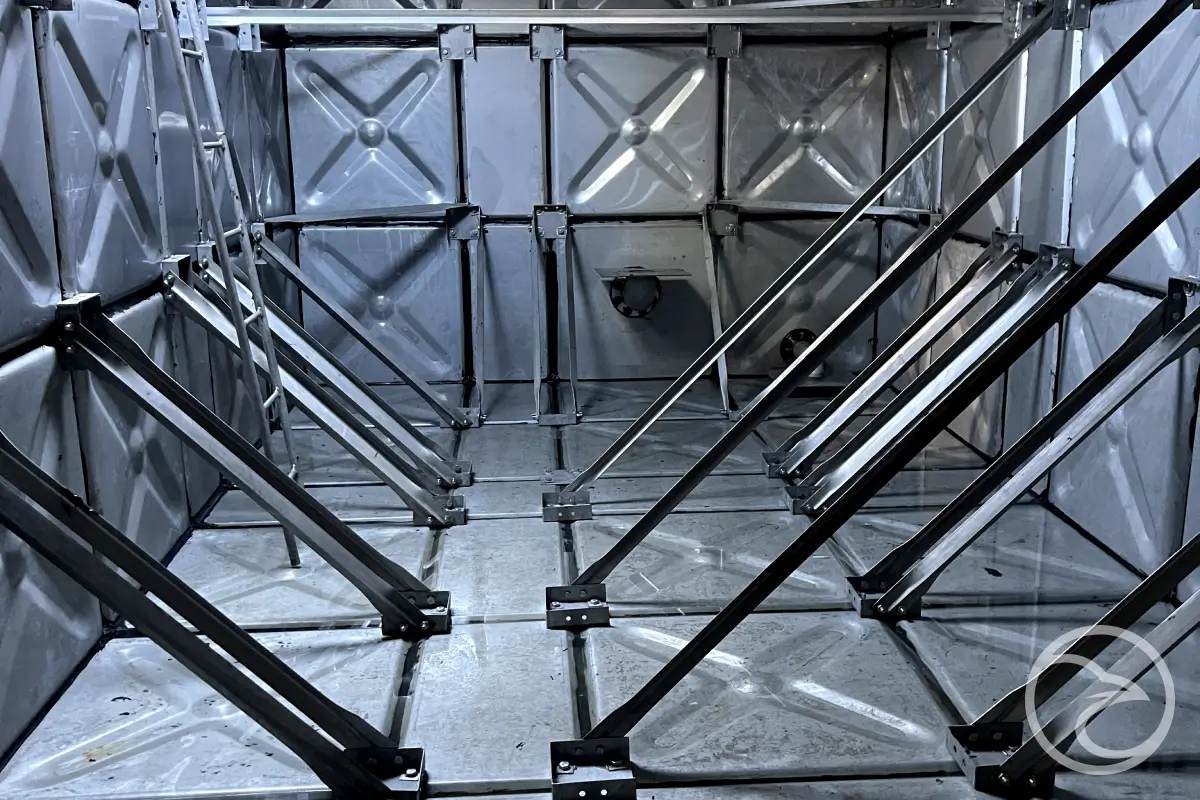
Installation requirements should be evaluated during the planning phase of a project. Both HDG and stainless steel tanks are available in sectional designs that simplify transportation and on-site assembly.
This approach can be particularly beneficial when:
- Access is restricted
- Large storage capacities are required
- Installation space is limited
Structural requirements may vary depending on tank size, location, and intended use.
Factors to consider include:
- Foundation design
- Wind loading
- Seismic requirements
- Site accessibility
Early planning helps ensure efficient installation and long-term performance.
Cost Comparison
Cost is often a significant factor in material selection. HDG tanks generally offer a lower initial purchase cost than stainless steel alternatives. This makes them attractive for projects with budget constraints or large storage capacity requirements.
Stainless steel tanks typically require a higher upfront investment. However, some project owners consider the long-term benefits of enhanced corrosion resistance and reduced maintenance requirements when evaluating overall lifecycle costs.
Rather than focusing solely on purchase price, decision-makers should consider:
- Installation costs
- Maintenance requirements
- Expected service life
- Environmental conditions
- Operational requirements
A lifecycle approach often provides a more accurate comparison.
Common Applications
Both materials are used across a variety of industries. The most suitable option often depends on project priorities.
| Requirement | HDG Tanks | Stainless Steel Tanks |
|---|---|---|
| Fire water storage | Excellent | Excellent |
| Commercial water storage | Excellent | Excellent |
| Potable water storage | Good | Excellent |
| Budget-focused projects | Excellent | Moderate |
| Coastal environments | Good | Excellent |
| High-humidity environments | Good | Excellent |
| Long-term corrosion resistance | Good | Excellent |
This comparison highlights that neither material is universally better in every situation.
Which Water Tank is Right for Your Project?
The best water tank material depends on the specific needs of the project.
HDG tanks may be a practical choice when:
- Budget is a key consideration
- Large storage volumes are required
- Environmental conditions are moderate
- Cost-effective performance is the priority
Stainless steel tanks may be more suitable when:
- Water quality is critical
- Corrosion resistance is a major concern
- Environmental conditions are challenging
- Long-term durability is the primary objective
Evaluating both immediate and long-term requirements can help determine the most appropriate solution.
Conclusion
HDG and stainless steel water tanks are both widely used and proven water storage solutions. Each offers unique advantages depending on the operating environment, water quality requirements, and project budget.
HDG tanks are often valued for their affordability, strength, and versatility. Stainless steel tanks are frequently chosen for their superior corrosion resistance and suitability for demanding environments.
Rather than identifying a single winner, the best approach is to assess project-specific requirements and select the material that provides the most appropriate balance of performance, durability, and cost.