Water tanks are designed to provide decades of reliable service. However, no asset lasts forever. Over time, owners and facility managers face an important question: should they refurbish or replace a water tank?
The answer depends on several factors. The condition of the tank, future operational needs, project costs, and expected service life all play a role in the decision-making process.
Understanding these factors can help organisations make informed choices and maximise the value of existing infrastructure.
Why this Decision Matters
Replacing a water tank is a major investment. It often involves significant construction work, operational disruption, and extended project timelines.
Refurbishment offers an alternative approach. Instead of removing the entire structure, refurbishment focuses on restoring and upgrading existing components to extend the tank’s service life.
Many facility owners investigate sectional tank refurbishment before committing to a full replacement project. The right solution depends on the specific condition and requirements of the asset.
The Current Condition of the Tank
The physical condition of the tank is usually the first factor considered. A professional assessment helps determine whether the structure remains suitable for refurbishment.
Several areas are typically evaluated:
- structural stability
- tank walls and panels
- roof systems
- protective coatings
- access structures
- supporting framework
In many cases, deterioration affects only certain components rather than the entire tank. When the primary structure remains sound, refurbishment may provide a practical solution.
How Tank Age Affects the Decision
Many people assume an older tank automatically requires replacement. This is not always true. A well-maintained tank can continue operating effectively long after its original design life expectations.
Age should be assessed alongside:
- maintenance history
- environmental exposure
- operational demands
- previous upgrades
Two tanks of the same age may have very different refurbishment requirements. For this reason, age should be viewed as one factor rather than the deciding factor.

When Replacement is the Better Option
There are circumstances where replacement may be the more practical solution.
This is more likely when:
- structural deterioration is widespread
- capacity requirements have changed significantly
- the tank design no longer meets operational needs
- refurbishment costs approach replacement costs
Replacement may also be considered when major site redevelopment projects are planned. In these situations, installing a new tank can offer greater flexibility for future operations.
How Sectional Tanks are Evaluated
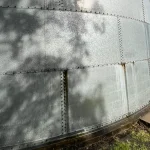
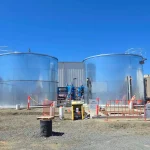
Sectional tanks are commonly used in commercial and industrial applications. These tanks are built using individual panels that form the overall structure.
When refurbishment is being considered, specialists assess:
- panel condition
- structural connections
- roof integrity
- coating performance
- access systems
A sectional tank does not necessarily require replacement simply because some components show signs of age. In many cases, sectional tank refurbishment can restore performance while preserving the existing structure.
This approach can help extend service life without the expense of a complete replacement project.
Comparing Long-Term Costs
Project costs should be evaluated from a long-term perspective. Focusing only on upfront expenses can lead to poor decisions.
A more effective approach is to compare:
- capital investment
- expected service life
- future maintenance requirements
- operational disruption
- potential upgrade opportunities
Sometimes refurbishment delivers excellent long-term value. In other cases, replacement may provide better returns over the life of the asset.
The goal is to understand the total cost of ownership rather than the initial project price alone.
Questions to Ask Before Making a Decision
Before choosing between refurbishment and replacement, it is helpful to consider several questions.
These include:
- Is the primary structure still sound?
- Does the tank meet current storage requirements?
- Can refurbishment significantly extend service life?
- Are operational needs expected to change?
- What level of disruption can the facility accommodate?
- How do long-term costs compare?
Answering these questions creates a clearer framework for decision-making.
Making an Informed Choice
There is no universal answer to whether to refurbish or replace a water tank. Every tank has unique conditions, operational requirements, and long-term objectives.
A detailed assessment helps identify the most suitable option. Understanding the key factors involved allows organisations to make informed decisions and maximise long-term value.