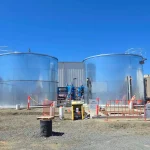
GRP panel tanks are widely used for storing water in commercial, industrial, and residential facilities. GRP stands for glass-reinforced plastic, also commonly called fibreglass-reinforced plastic. These tanks are lightweight, corrosion-resistant, modular, and suitable for many water storage applications.
However, GRP panel tanks are not completely maintenance-free. Problems can develop as the tank ages or operating conditions change. Some issues develop slowly and remain unnoticed for years.
Others become visible through leaks, deformation, unusual water conditions, or damaged components. The tank itself is also only one part of the system. Seals, bolts, supports, internal fittings, pipe connections, and foundations can all affect performance.
Understanding common GRP water tank problems helps facility teams identify changes before they become more serious. This guide explains common issues, their causes, warning signs, and factors affecting GRP tank service life.
For more information about our water storage solutions, visit our GRP panel tanks page and explore the available options.
What can go Wrong with a GRP Panel Tank?
GRP water tanks are assembled from individual moulded panels. The panels are connected using bolts, seals, gaskets, and structural components.
This modular construction provides flexibility but also creates multiple areas requiring attention.
Common problems include:
- leaking panel joints;
- worn or compressed seals;
- loose or corroded fasteners;
- panel cracking;
- panel deformation;
- internal surface deterioration;
- external surface damage;
- damaged supports or bracing;
- corrosion of metallic components;
- sediment accumulation;
- biological contamination;
- damaged access components;
- pipe connection stress;
- foundation or support problems.
Not every visible change means the tank has failed. Not every visible change means the tank has failed. However, changes should not simply be ignored. The important question is why the change has occurred.
Finding the underlying cause can prevent the same issue from developing elsewhere.
1. Leaking Panel Joints
Joint leakage is one of the most recognisable GRP water panel tank problems. GRP tanks contain numerous connections between individual panels. These joints normally rely on sealing materials and correct bolt compression.
Over time, sealing materials can lose elasticity or become compressed. Movement within the structure can also affect individual joints.
Small leaks may initially appear as damp areas around panel connections.
Other warning signs include:
- water staining;
- mineral deposits;
- persistent moisture;
- dripping joints;
- wet areas around the tank;
- deterioration around bolts or seals.
A leak should not automatically be treated as an isolated seal problem. Changes in structural loading can also place additional stress on joints.
Finding the source is therefore more important than simply treating visible water.
2. Seal and Gasket Deterioration
Seals are essential components within a panel tank. They create watertight connections between individual sections. However, sealing materials do not remain unchanged throughout the tank’s entire life.
Age, compression, temperature, water chemistry, and movement can affect their condition. Older seals may become harder, brittle, compressed, or less flexible. Once this happens, the seal may become less effective.
Deterioration may not immediately produce a major leak. The first indication could be slight moisture around a joint. Changes can also occur gradually across several sections.
For this reason, seal condition should be considered during routine tank assessment.
3. Cracks in GRP Panels
GRP provides good strength while remaining relatively lightweight. However, individual panels can still develop cracks or surface damage.
Possible causes include:
- accidental impact;
- excessive mechanical loading;
- poor support;
- structural movement;
- ageing;
- installation damage;
- concentrated stress;
- unusual pressure conditions.
Cracks vary considerably in severity. Some may affect only the outer surface. Others can extend deeper into the panel structure. Location is also important.
Damage around corners, connections, fittings, or stressed areas may require closer investigation. A crack should therefore be assessed rather than judged by appearance alone.
4. Panel Bulging and Deformation
A filled water tank places substantial pressure on its walls. FRP panel tanks are designed to manage these loads through their structural system.
Panels should therefore maintain their intended shape under normal operating conditions. Noticeable bulging or deformation can indicate a developing structural issue.
Potential causes include:
- damaged internal bracing;
- incorrect loading;
- weakened supports;
- loose structural connections;
- installation problems;
- foundation movement;
- long-term material deterioration.
Minor variations in panel shape can sometimes be part of the original design. New or increasing deformation deserves more attention.
Comparing current conditions with previous inspection records can be useful. Changes over time often provide more information than a single observation.
5. Problems With Bolts and Fasteners
GRP itself does not rust like steel. However, FRP water tanks often contain metallic components. These can include bolts, washers, brackets, supports, and internal structural elements.
Their condition can influence the entire tank. Possible problems include corrosion, loosening, damaged threads, and missing fasteners.
Fastener deterioration can affect joint compression or structural stability. Water chemistry and environmental conditions can accelerate corrosion in vulnerable metallic components.
High humidity around the tank can also contribute. Visible corrosion should therefore be investigated before significant material loss occurs.
6. Internal Bracing Problems
Many panel tanks use internal structural bracing to control movement and support tank walls. These components experience loads whenever the tank is filled.
Their condition is therefore important to overall tank performance.
Potential issues include:
- corrosion;
- loose connections;
- damaged brackets;
- distorted components;
- missing hardware;
- deterioration around connection points.
Internal bracing problems may not be visible from outside the tank. External panel deformation can sometimes provide an early warning.
However, internal assessment may be required to determine the actual condition.
7. Surface Deterioration
GRP panels have surfaces designed to protect the underlying composite structure. These surfaces can gradually change because of age and environmental exposure.
External deterioration may be influenced by sunlight, weather, heat, chemicals, or physical damage.
Possible signs include:
- fading;
- chalking;
- rough surfaces;
- localised discolouration;
- exposed fibres;
- blistering;
- surface cracking.
Surface changes do not always indicate structural failure. Their significance depends on depth, location, extent, and progression.
Exposed fibres or deeper damage generally deserve greater attention than cosmetic fading.
8. Sediment Accumulation
Stored water can contain suspended particles and other materials. Some of these materials eventually settle at the bottom. Sediment can accumulate gradually between cleaning cycles. A small amount does not necessarily indicate tank failure.
However, excessive accumulation can affect water storage conditions. Sediment can also make internal assessment more difficult. The amount present depends on several factors.
These include incoming water quality, tank usage, turnover, and cleaning frequency. Unexpectedly rapid sediment accumulation may justify investigating the incoming water supply.
9. Biological Growth and Water Quality Problems
A structurally sound tank can still develop water quality issues. Stagnation, sediment, temperature, contamination, and poor sealing can create undesirable conditions. Potential warning signs include unusual odours, discolouration, visible growth, or debris.
Water quality problems can have several possible sources. The tank should not automatically be assumed to be the only cause.
Potential contributing factors include:
- low water turnover;
- sediment;
- damaged covers;
- poorly sealed openings;
- contamination during maintenance;
- unsuitable temperatures;
- external material entering the tank.
Water quality concerns may require specialised testing and investigation. Visual inspection alone cannot identify every microbiological or chemical issue.
10. Problems Around Pipe Connections
Pipe connections create localised points where external forces can reach the tank. Poorly supported pipework can place unnecessary stress on panels and fittings.
Movement may also occur because of vibration or temperature changes.
Warning signs can include:
- cracking around connections;
- local deformation;
- leaking fittings;
- damaged seals;
- movement around penetrations.
The visible defect may therefore be a symptom rather than the original problem. Repairing the damaged area without correcting pipe stress may allow the issue to return.
11. Roof, Hatch and Access Component Damage
Tank roofs and access areas also require attention. Hatches should remain secure and suitable for their intended function.
Damage can allow dirt, insects, water, or other contaminants to enter.
Common concerns include:
- damaged hatch seals;
- loose covers;
- cracked roof panels;
- damaged screens;
- corrosion around access hardware;
- unsafe ladders or platforms.
These issues may not affect the tank walls directly.
However, they can affect hygiene, access, and safe maintenance.
12. Foundation and Support Problems
Not every FRP water tank problem starts with the tank. The supporting structure can play an equally important role. A panel tank relies on stable and suitable support. Foundation movement can change how loads are distributed.
Uneven support can introduce stress into panels, joints, and structural components.
Possible warning signs include:
- tank movement;
- uneven alignment;
- local panel distortion;
- recurring joint leaks;
- visible support deterioration;
- changes around the tank base.
Recurring repairs in one location can sometimes indicate an underlying support problem. The broader structure should therefore be considered during investigation.

Why do GRP Panel Tank Problems Develop?
There is rarely one universal cause. Problems usually result from a combination of age, environment, installation, and operating conditions.
Age
Materials change over time. Seals may harden, surfaces may deteriorate, and metallic components may corrode.
Age alone does not determine tank condition. However, older tanks generally require closer monitoring.
Installation Quality
Correct installation is important for long-term performance. Panel alignment, bolt tension, sealing, support, and pipework all matter.
Small installation problems can create localised stress. Those stresses may become visible only after years of operation.
Water Chemistry
Stored water can influence seals, metallic components, and internal surfaces. Different water sources contain different chemical characteristics.
Changes in water treatment can also alter the tank’s operating environment.
Temperature
Temperature affects both stored water and tank materials. Repeated heating and cooling can contribute to expansion and contraction.
This movement can affect joints and connections over time.
UV and Weather Exposure
Outdoor tanks experience sunlight, rain, wind, and temperature fluctuations. Long-term ultraviolet exposure can affect exposed surfaces.
Weather conditions may also accelerate deterioration of surrounding components.
Operating Conditions
Tank usage patterns can change during a building’s life. Water levels, turnover, connected equipment, and pipework loads may all change.
A system operating differently from its original design deserves additional attention.
Lack of Maintenance
Small defects are easier to manage when identified early. Without routine checks, minor deterioration can progress unnoticed. A leaking joint can worsen.
Corrosion can spread. Sediment can continue accumulating. Maintenance is therefore closely connected with service life.
How Long do GRP Panel Tanks Last?
There is no single lifespan that applies to every GRP panel water tank. Many well-installed and properly maintained tanks can remain operational for decades. A service life of around 20 to 30 years is often achievable under suitable conditions.
Some tanks may remain functional for longer. Others can develop significant problems earlier.
Actual service life depends on:
- original tank quality;
- installation quality;
- water chemistry;
- operating temperature;
- environmental exposure;
- structural loading;
- maintenance history;
- inspection frequency;
- condition of seals;
- condition of metallic components;
- previous repairs.
Age should therefore be considered alongside actual condition. A 20-year-old tank may still perform well. A much newer tank can have problems caused by installation or unusual operating conditions.
Can GRP Water Tank Problems be Predicted?
Exact failures cannot always be predicted. However, developing risks can often be identified before major failure occurs. The most useful approach is monitoring change over time.
Inspection records can reveal recurring or worsening conditions. For example, a small leak may appear insignificant during one inspection.
Repeated leakage at the same joint creates a different picture. The same principle applies to corrosion, deformation, and surface cracking.
Historical information can include:
- photographs;
- inspection reports;
- repair records;
- cleaning records;
- water quality results;
- maintenance records;
- dates of component replacement.
Trends are often more valuable than isolated observations. A tank that changes quickly may require more attention than a stable older tank.
Can You Identify GRP Panel Tank Problems Yourself?
Some warning signs can be identified during normal visual observations. Facility personnel can watch for obvious external changes.
These may include:
- visible water leaks;
- damp areas;
- staining around joints;
- unusual panel deformation;
- visible cracks;
- corrosion;
- damaged access covers;
- standing water around the base;
- unusual smells or water appearance.
These observations can help identify when further assessment is needed. However, visual checks have limitations. Many important components are inside the tank.
Some damage may also be hidden behind joints or structural elements. The severity of composite damage can be difficult to determine visually. Entering a tank also introduces significant safety considerations.
Internal access should therefore follow appropriate procedures and site requirements. Routine observation is useful. It should not replace competent inspection where detailed assessment is required.
The Role of GRP Tank Inspection
Inspection provides information about the tank’s current condition. It can also help identify changes before they become more extensive. The scope depends on the tank, its application, and its condition.
An assessment may consider:
- external GRP panels;
- panel joints;
- seals;
- bolts and fasteners;
- internal bracing;
- roof sections;
- access components;
- pipe connections;
- supporting structures;
- evidence of leakage;
- sediment or contamination;
- previous repair areas.
Photographic records can be particularly useful. They allow future inspections to compare the same areas. Inspection findings can also help determine whether maintenance, repair, or further investigation is appropriate.
The purpose is not simply to find visible defects. A useful inspection also considers why those defects may have developed.
Maintenance of GRP Panel Tanks
Maintenance should focus on preserving tank condition and addressing deterioration before it progresses. The required work depends on the tank and its operating environment.
Typical maintenance activities can include:
- checking accessible joints;
- monitoring known leak areas;
- maintaining access components;
- cleaning when required;
- removing excessive sediment;
- checking pipe supports;
- monitoring corrosion;
- replacing deteriorated seals or components;
- maintaining surrounding drainage;
- keeping inspection records.
Maintenance frequency should reflect actual risk. A heavily used tank may require different attention from a lightly used system. Environmental exposure should also be considered.
Previous defects are another useful factor when planning future maintenance. Repeatedly repairing the same symptom is rarely an effective long-term strategy.
The underlying cause should be investigated.
Repair or Replacement: what is the Difference?
Finding damage does not automatically mean the entire tank requires replacement. Many localised GRP tank problems can potentially be repaired. The correct approach depends on the type and extent of deterioration.
Repair may be considered when problems are limited to specific areas. Examples can include individual seals, fittings, fasteners, or localised panel damage.
More extensive deterioration may require broader intervention. Replacement becomes more relevant when multiple systems are approaching the end of their useful condition.
Factors influencing the decision include:
- extent of damage;
- structural condition;
- number of affected panels;
- condition of internal components;
- frequency of leaks;
- history of previous repairs;
- tank age;
- support condition;
- operational requirements;
- practicality of future maintenance.
Cost should not be the only consideration. Repeated small repairs can become inefficient when deterioration is widespread. Conversely, replacing an entire tank for one isolated defect may be unnecessary.
A condition-based decision is usually more useful than an age-only decision.
What Should You do when You Find a Problem?
The first step is to document what you have found. Take photographs where this can be done safely. Record the location and approximate size of the affected area.
Note whether the condition appears stable or is changing. For a leak, observe whether it is constant or linked to water level. For deformation, compare the area with previous photographs if available.
Avoid assuming that the visible defect is the root cause. A leaking seal could be affected by structural movement. A cracked panel could be related to pipe loading.
Recurring corrosion could indicate environmental or water chemistry factors. The next action should reflect the seriousness of the condition. Minor observations may require monitoring or planned maintenance.
Active leaks or structural changes may require more urgent assessment. Significant deterioration should not be ignored until the next routine maintenance cycle.
When does a GRP Water Tank Problem Become Serious?
There is no single visual sign that determines severity. Several factors should be considered together.
These include:
- how quickly the problem is developing;
- whether water is escaping;
- whether structural components are affected;
- whether multiple areas show similar deterioration;
- whether the tank remains stable;
- whether water quality may be affected;
- whether previous repairs have failed.
A small stable defect may present less concern than rapidly increasing deformation. Likewise, repeated leaks can indicate a broader problem.
Severity should therefore be based on condition, progression, location, and likely cause.
How to Reduce the Risk of Future GRP Tank Problems
Not every problem can be prevented. However, good asset management can reduce avoidable deterioration. Start by understanding the tank’s history.
Know when it was installed and whether major repairs have occurred. Keep inspection and maintenance records together. Photograph important areas consistently. Monitor known weak points rather than waiting for obvious failure.
Keep pipework properly supported. Pay attention to unusual water conditions. Address drainage problems around the tank.
Do not ignore recurring moisture around joints. Most importantly, investigate patterns. Repeated defects often provide useful information about the underlying cause.
Final Thoughts
GRP panel tanks can provide long service when installation, operating conditions, and maintenance remain suitable. However, no water storage system should be considered maintenance-free. Joint leaks, seal deterioration, cracking, corrosion, deformation, and sediment are among the common issues.
The causes are often more complex than the visible symptoms suggest. Age can contribute, but it is only one factor. Installation, water chemistry, structural loading, weather, maintenance, and pipework can also influence tank condition.
Regular observation makes developing changes easier to identify. Documented inspections provide an even clearer picture of deterioration over time. When problems appear, the underlying cause should be investigated before choosing a response.
Some defects may only require maintenance or local repair. More widespread deterioration can eventually make replacement the more practical option. The key is understanding the tank as a complete system.
Panels, joints, seals, supports, fittings, foundations, and operating conditions all work together. Monitoring those elements helps identify problems earlier and supports better long-term water storage management.