Water tanks in Sydney face constant exposure to harsh environmental conditions. Over time, these elements significantly weaken tank materials, accelerate corrosion, and increase the risk of environmental tank damage and structural failure. Whether a facility relies on steel, concrete, HDG, or GRP tanks, external and atmospheric factors remain some of the biggest threats to long-term performance.
Understanding how UV radiation, salinity, moisture, and chemical exposure affect water storage systems is essential for developing a long-lasting protection strategy — especially when selecting or upgrading tank liners. Developing a long-lasting protection strategy — especially when selecting or upgrading tank liners.
UV Radiation: Gradual Surface Breakdown and Material Fatigue
Sydney experiences high levels of solar radiation throughout the year, and UV exposure is one of the most common causes of tank deterioration. Prolonged UV stress impacts tanks in several ways:
- Fading and weakening of external coatings
- Surface cracking, especially on GRP and polymer tanks
- Accelerated brittleness, leading to stress fractures
- Heat absorption, which causes thermal expansion and joint movement
Even metal tanks are indirectly affected, as heat cycling increases internal condensation and wall stress. While external protective coatings slow down the damage, UV radiation eventually breaks down surface layers and exposes the material beneath.
A high-quality internal liner acts as the final barrier between UV-driven deterioration and stored water, preventing cracks or thinning walls from turning into full structural compromise.
Salinity: a Significant Risk for Coastal Facilities
Many Sydney facilities operate close to the coastline, where salt-laden air greatly accelerates corrosion. Salinity affects tanks by:
- Causing pitting corrosion on stainless steel and mild steel
- Breaking down zinc layers on hot-dip galvanised tanks
- Increasing the electrochemical reaction rate inside the tank
- Compromising external coatings and weld seams
Salt particles settle on tank surfaces, absorb moisture from the air, and create a conductive layer that keeps corrosion active even on dry days. Over time, this leads to rusting, weakened connections, leaks, and reduced tank lifespan.
Internal tank liners provide a controlled environment inside the tank, isolating stored water from metal components that may be slowly degrading from coastal conditions.
Moisture & Humidity: Hidden Corrosion Accelerators
Moisture plays a much larger role in tank deterioration than most operators realise. Even a completely sealed tank is vulnerable to humidity and condensation, which can occur from:
- Rapid temperature changes
- Stored water temperature differences
- Internal evaporation
- Cool night temperatures after hot days
This results in:
- Corrosion under insulation (CUI)
- Corrosion under coatings (CUC)
- Internal wall sweating, which weakens protective layers
- Microbial growth, affecting water quality
Moisture also creates ideal conditions for microbiologically influenced corrosion (MIC), which can rapidly damage metal surfaces and produce deep pits.
A specialised liner eliminates water-to-wall contact, stopping moisture-driven corrosion before it begins.
Chemical Exposure: Industrial Vapours, Cleaning Agents & Water Composition
Industrial environments often expose tanks to airborne chemicals, vapours, and cleaning residues that gradually damage exterior and interior surfaces. Such exposure may cause:
- Coating degradation
- Acidic or alkaline surface reaction
- Accelerated corrosion of welds and joints
- Chemical stress cracking, especially in GRP and plastics
Inside the tank, water chemistry also plays a role. High chlorine, elevated mineral content, and fluctuating pH levels gradually wear down unprotected tank walls.
Early detection through routine tank inspections helps identify UV cracking, corrosion, and chemical wear before structural failure occurs.
Tank liners offer chemical-resistant protection, ensuring stored water does not react with the tank surface — which is especially important for facilities with treated, recycled, or industrial process water.
Why Tank Liners are Essential for Long-Term Protection
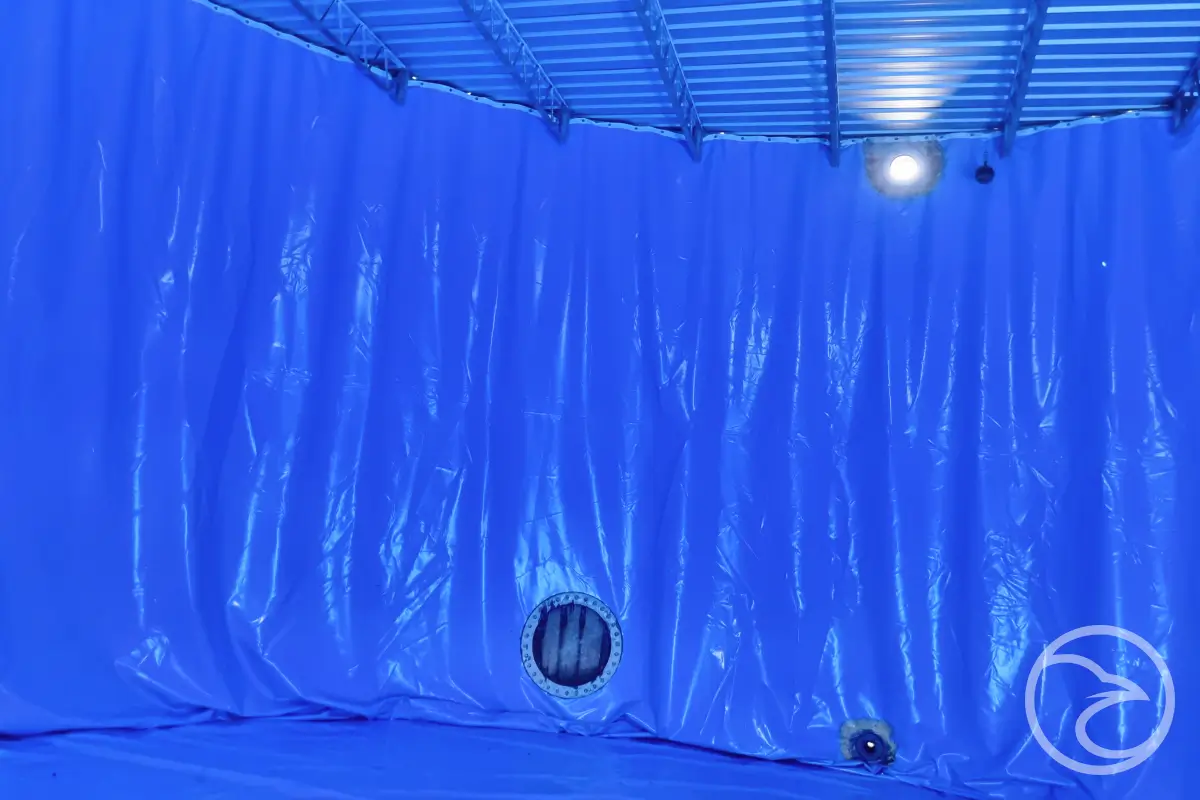
Environmental exposure is unavoidable, but environmental tank damage and structural degradation are not. The most reliable way to extend tank life is to create a durable internal barrier that stops corrosion, chemical attack, and moisture penetration.
Tank liners provide:
- Complete isolation between the tank surface and stored water
- Protection from UV-driven internal heat stress
- Resistance to salinity and corrosive atmospheres
- Reduced chemical wear
- Improved hygiene and water quality
- Longer service intervals and lower repair costs
For Sydney facilities facing extreme climate conditions, a properly designed liner can add 10–20 years of extra working lifespan to a tank.
When Environmental Damage Requires Immediate Action
Environmental stress can escalate quickly if early warning signs are ignored. If the tank shows:
- Surface bubbling or coating failure
- Corrosion around joints or fittings
- Water discolouration or sediment buildup
- Cracking, deformation, or wall warping
- Persistent leaking around access points