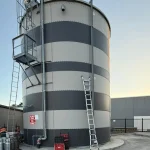
Large water storage systems are often designed to provide security, flexibility, and reserve capacity. However, system effectiveness depends not only on storage volume, but also on how consistently stored water is renewed. This is where water turnover in storage systems becomes a critical, yet frequently overlooked, factor. Without steady turnover, even well-designed systems can struggle to operate efficiently.
What Water Turnover Means in Large Storage Systems
Water turnover refers to how frequently the stored volume is replaced or refreshed through normal system operation. In large storage systems, turnover is rarely uniform. Some sections may experience frequent inflow and outflow, while others remain relatively static. When turnover becomes inconsistent, system balance can be disrupted, reducing overall effectiveness.
Unlike small-scale storage, large systems introduce complexity through size, multiple inflow points, and variable demand patterns. As a result, turnover rates are shaped more by operational behaviour than by storage capacity alone.
Why Large Storage Volumes Create Turnover Challenges
As storage size increases, achieving consistent turnover becomes more difficult. Large volumes often exceed daily or even weekly demand, which means portions of stored water remain in place for extended periods. While this may appear harmless, it creates uneven circulation and limits the system’s ability to respond dynamically to changes in demand.
In large water storage systems, turnover is not simply a matter of filling and emptying the tank. It depends on how water moves through the system as part of ongoing supply operations. When this movement slows or becomes irregular, system efficiency can decline without any visible structural issue.
Operational Factors that Influence Water Turnover
Several operational factors play a role in determining turnover rates. Usage patterns are among the most significant. Systems that experience sharp demand peaks followed by long periods of inactivity tend to develop uneven turnover. Similarly, storage systems that operate continuously near maximum capacity may struggle to refresh their full volume effectively.
Inflow and outflow balance also matters. When inflow rates are misaligned with actual demand, turnover becomes concentrated in specific areas rather than evenly distributed across the system. Over time, this imbalance can limit system flexibility and reduce operational reliability.
How Inconsistent Turnover Affects System Operation
When water turnover in storage systems is inconsistent, the system becomes less responsive. Large volumes may appear stable, yet struggle to adapt to sudden demand shifts or operational changes. This can result in delayed system response, pressure fluctuations, or inefficient use of available storage capacity.
From a system perspective, inconsistent turnover reduces predictability. Operators may find that storage behaves differently under similar conditions, making planning and control more difficult. These effects often develop gradually, which is why turnover issues are frequently underestimated.
The Relationship Between Turnover and System Planning
Turnover should be considered at the planning stage, not treated as a secondary operational detail. Storage systems designed around theoretical capacity alone may perform well on paper but behave differently once integrated into real-world supply networks.
Planning for consistent water turnover involves understanding how the system will actually be used, not just how much water it can hold. Demand variability, operational schedules, and supply integration all influence whether turnover remains stable over time. When these factors are ignored, systems may underperform despite adequate storage volume.

Why Turnover is a System-Level Consideration
Consistent turnover is not tied to any single component of a storage system. It is a system-level characteristic shaped by interaction between storage, supply, and demand. Focusing solely on individual elements can overlook the broader dynamics that determine how effectively water moves through the system.
Large storage systems function best when turnover supports balanced operation across the entire network. This balance allows storage assets to contribute to reliability rather than simply acting as passive reserves.
Conclusion
The importance of consistent water turnover in large storage systems lies in its impact on system behaviour, flexibility, and operational reliability. Storage capacity alone does not guarantee effective performance. Without steady turnover, even large systems can become inefficient and unpredictable. By recognising turnover as a fundamental system characteristic, operators and planners can better align storage design with real-world operation, supporting more stable and responsive water storage systems over time.