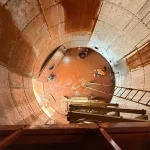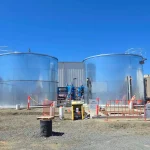
Tank inspections are essential for identifying deterioration, corrosion, coating defects and other issues that may affect the condition and service life of a tank. However, accessing every part of a tank can be difficult, particularly when inspections involve confined spaces, elevated areas or submerged components.
ROV and drone tank inspections provide another way to collect detailed visual information from areas that may otherwise be difficult or hazardous to access. Using remotely operated vehicles (ROVs) underwater and aerial drones in suitable above-water environments, inspectors can assess tank components while reducing the need for personnel to physically enter or access certain areas.
For asset owners, facility managers and maintenance teams, these technologies can make tank condition assessments safer, more efficient and easier to document.
This guide explains how ROV tank inspections and drone tank inspections work, where each technology can be used, their benefits and limitations, and how to determine the most appropriate inspection method for a particular tank.
What is an ROV and Drone Tank Inspection?
An ROV and drone tank inspection uses remotely operated equipment fitted with cameras and other inspection technology to examine areas of a tank without relying solely on direct physical access by an inspector.
The two technologies perform different roles.
An ROV (Remotely Operated Vehicle) is designed to operate underwater. During an ROV tank inspection, the vehicle can be deployed into the water and remotely controlled to capture visual information from submerged tank surfaces and components.
A drone tank inspection generally uses an unmanned aerial vehicle equipped with a camera to access elevated, difficult-to-reach or potentially hazardous areas where drone operation is suitable.
Both approaches can provide high-quality visual records that help inspection professionals assess the condition of the asset and identify areas that may require closer investigation, maintenance or repair.
ROV vs Drone Tank Inspection: What’s the Difference?
Although the terms are sometimes grouped together under remote inspection technology, ROVs and drones operate in very different environments.
| Inspection method | Typical environment | Common applications |
|---|---|---|
| ROV Inspection | Underwater | Submerged tank walls, floors and internal components |
| Drone Inspection | Air / accessible internal or external spaces | Tank roofs, external surfaces, elevated structures and difficult-to-access areas |
| Traditional Inspection | Direct physical access | Detailed hands-on assessment, testing and areas requiring direct inspector access |
The appropriate technology depends on the tank configuration, inspection objectives, accessibility and the type of information required.
In some situations, remote inspection technology can complement rather than completely replace conventional inspection methods.
What is an ROV Tank Inspection?
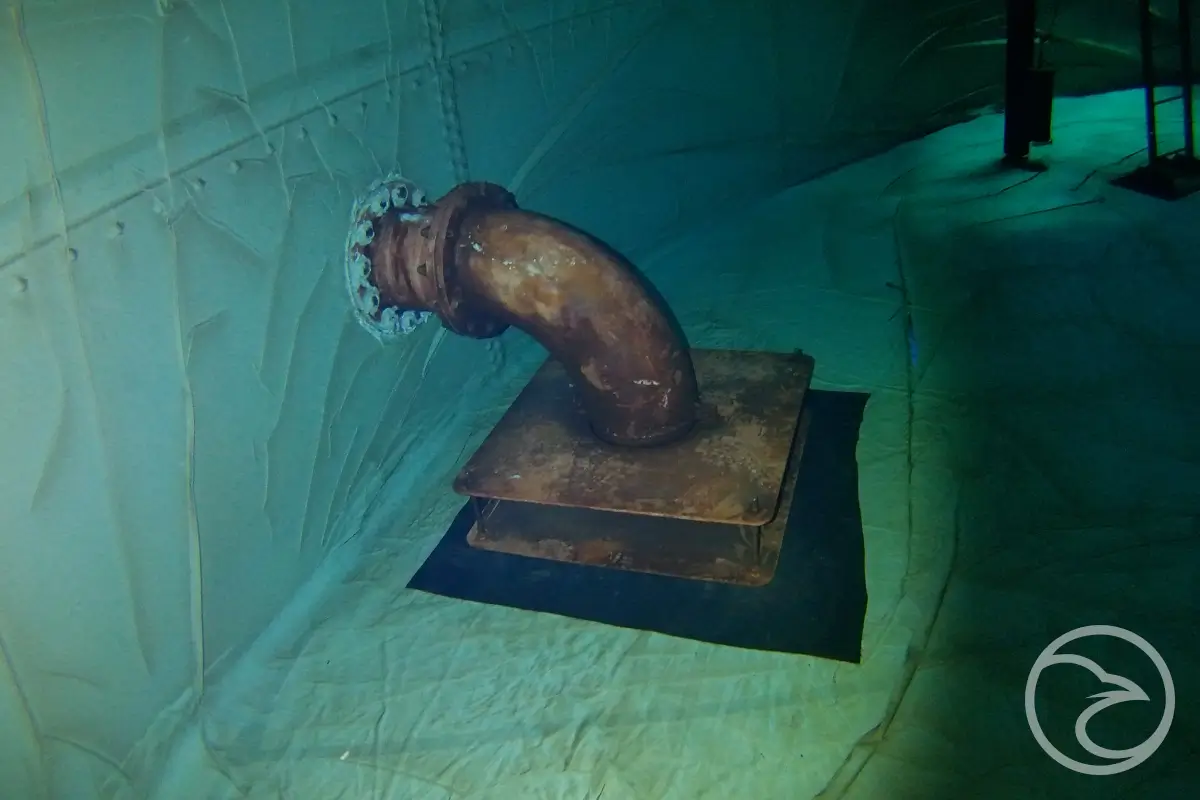
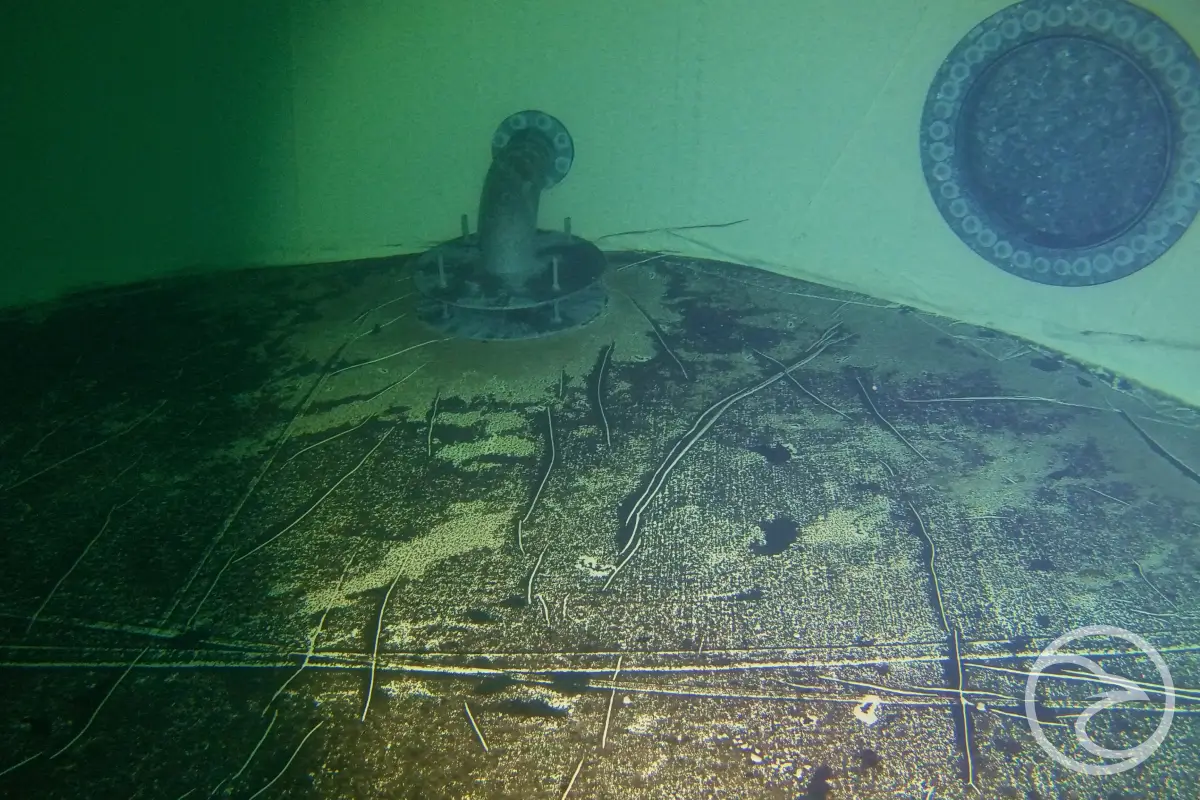
An ROV tank inspection uses a remotely operated underwater vehicle to inspect submerged areas of a tank. The ROV is controlled by an operator from outside the water and typically carries a camera and lighting system. As it moves through the tank, it provides visual information that can be reviewed and recorded.
Depending on the tank and inspection requirements, an ROV may help examine areas such as:
- submerged tank walls;
- floor areas;
- internal structural components;
- visible coating condition;
- areas showing possible corrosion or deterioration;
- sediment or debris accumulation; and
- other accessible underwater components.
One of the major advantages is that personnel do not need to physically enter the water to obtain the initial visual information. For tanks that need to remain operational, this can make ROV inspection particularly valuable where the inspection methodology and tank conditions allow it.
For submerged or difficult-to-access areas, ROV tank inspections provide a safe and efficient way to assess tank conditions without requiring direct personnel entry.
How Does an ROV Tank Inspection Work?
The exact process varies depending on the tank, site conditions and inspection requirements, but an ROV inspection generally begins with planning.
The inspection team considers the tank dimensions, configuration, access points, water conditions and areas that need to be assessed. The ROV is then introduced through an appropriate access point and controlled remotely.
As the vehicle moves through the tank, its camera provides a live view of accessible submerged surfaces. The operator can systematically examine areas of interest and capture visual records for subsequent assessment and reporting.
If the inspection reveals signs of deterioration or another condition requiring further investigation, additional inspection or testing methods may then be recommended.
This is an important distinction: an ROV provides valuable remote visual inspection capability, but the appropriate inspection method should always be determined by what needs to be assessed.
What is a Drone Tank Inspection?
A drone tank inspection uses an unmanned aerial vehicle to capture visual information from tank areas that would otherwise be difficult to access. Depending on the tank configuration and operating environment, drones can assist with inspection of external and elevated areas and, where suitable equipment and conditions permit, certain internal spaces.
High-resolution cameras allow inspectors to review components from different angles while recording imagery that can become part of the tank’s inspection documentation.
Drone inspections can be particularly useful when conventional access would otherwise involve scaffolding, elevated work platforms or personnel working at height.
How do Drones Help with Tank Inspections?
Tank structures can contain areas that are difficult to observe safely from ground level. A drone provides a mobile camera platform that can reach many of these locations without requiring an inspector to physically occupy the same position.
For example, drone inspection may help provide visual access to:
- tank roofs;
- external walls and panels;
- elevated connections and components;
- difficult-to-access structural areas;
- visible corrosion;
- coating deterioration;
- damaged or deteriorated components; and
- other areas requiring closer visual examination.
The footage also creates a visual record of observed conditions. This can be useful not only for the immediate inspection but also for ongoing asset management. Images captured during different inspections can help teams monitor visible changes in tank condition over time.
What are the Benefits of Inspecting a Tank by Drone or ROV?
The value of remote inspection technology goes beyond simply putting a camera in a difficult-to-reach location.
Reduced Personnel Exposure to Hazardous Areas
One of the most significant advantages is the ability to obtain visual information remotely. ROVs can access submerged environments while drones can inspect certain elevated or difficult-to-reach areas. This may reduce the amount of direct personnel access required during parts of an inspection.
Access to Difficult-to-Reach Areas
Tank geometry can make inspection challenging. Remote equipment can provide views of locations that would otherwise require additional access equipment or specialised procedures.
Less Reliance on Access Equipment
Traditional inspection of elevated tank areas may require scaffolding, ladders, elevated work platforms or other access arrangements. Where a drone can safely and effectively perform the required visual inspection, some of this equipment may not be necessary.
Detailed Visual Records
Drone and ROV cameras can produce images and video that document the condition observed at the time of inspection. These records can support reporting, maintenance planning and future condition comparisons.
Efficient Initial Condition Assessment
Remote inspection can help identify areas that deserve closer attention. Instead of treating every part of the asset in exactly the same way, visual information can help inspection and maintenance teams understand where deterioration is occurring and determine whether additional investigation is required.
Potential to Reduce Operational Disruption
Depending on the type of tank and the inspection requirements, remote technology may reduce some of the disruption associated with obtaining access to difficult areas. This is particularly relevant for operational assets where unnecessary downtime can create additional cost and complexity.
ROV and Drone Inspections vs Traditional Tank Inspections
Remote inspection technology does not mean conventional tank inspection has become unnecessary. Each method has a different role. Traditional inspections allow qualified personnel to physically access components and perform assessment or testing that cannot be completed from imagery alone.
Remote inspections are particularly useful where the primary objective is visual assessment of areas that are difficult, submerged or hazardous to access.
For many assets, the most effective strategy may therefore involve a combination of methods. An ROV or drone can first provide visual information about the overall condition of accessible areas. If a potential defect is identified, inspectors can determine whether closer physical examination, testing, cleaning or repair is necessary.
The goal should not be to use a drone or ROV simply because the technology is available. The goal is to select an inspection method that provides the information required while managing access, safety and operational considerations appropriately.
What Types of Tanks can be Inspected Using ROVs and Drones?
Remote inspection technology can potentially be used across a range of tank assets, although suitability depends on the tank design, contents, accessibility and inspection objectives.
Applications may include:
- fire water tanks;
- commercial water storage tanks;
- industrial storage tanks;
- large sectional tanks;
- potable water tanks where an appropriate inspection methodology is used; and
- other water-retaining assets.
The inspection approach should be assessed for each tank individually. An ROV that is suitable for one submerged environment may not automatically be appropriate for another, just as an aerial drone cannot safely or effectively operate in every tank configuration.
ROV and Drone Inspections for Industrial Assets
Remote inspection technologies have become useful across industries where infrastructure is large, difficult to access or located in potentially hazardous environments. Commercial drones are used for applications including infrastructure inspection, surveying, construction monitoring and asset condition documentation. In industrial environments, they can help inspectors observe elevated structures and other areas where conventional access may be more complex.
ROVs perform a similar role underwater. For tank owners, the key benefit is not the technology itself but the ability to collect useful condition information from locations that are otherwise challenging to inspect.
Can Drones Inspect the Inside of a Tank?
In some circumstances, yes, but internal drone inspection is highly dependent on the environment and equipment. Flying inside a tank is different from operating a drone outdoors. Confined spaces can create challenges involving navigation, obstacles, lighting, communications and limited operating space.
The tank configuration and inspection objective therefore need to be assessed before determining whether a drone is an appropriate option. For submerged areas, an ROV is generally the relevant remote inspection technology rather than an aerial drone.
This is why ROV tank inspection and drone tank inspection should be viewed as complementary technologies, rather than interchangeable terms.
How Much does a Drone Tank Inspection Cost?
There is no single price that applies to every drone tank inspection.
The cost can vary according to factors such as:
- tank size and configuration;
- internal or external inspection requirements;
- accessibility;
- site conditions;
- inspection scope;
- equipment required;
- level of documentation and reporting required; and
- whether additional inspection methods are necessary.
A relatively straightforward external visual assessment may involve very different resources from an inspection of a large industrial tank with complex access conditions. For that reason, inspection costs are best determined after the tank and required scope have been assessed.
For that reason, inspection costs are best determined after the tank and required scope have been assessed. The cheapest inspection method is also not necessarily the most cost-effective option. Asset owners should consider the quality of information required, access requirements, potential operational disruption and whether the selected method can adequately address the inspection objectives.
When Should You Consider an ROV or Drone Tank Inspection?
Remote inspection may be worth considering when a tank contains areas that are difficult or potentially hazardous to access using conventional methods.
Examples include situations where:
- submerged areas require visual assessment;
- elevated external areas are difficult to reach;
- access equipment would add significant complexity;
- a visual record of tank condition is required;
- an initial condition assessment is needed before planning further work; or
- reducing direct personnel exposure is desirable.
However, the decision should be based on the inspection objective rather than the technology alone. If physical testing or direct access is necessary to establish the condition of a component, remote imagery may form only one part of the overall inspection.
Choosing the Right Tank Inspection Method
No two tanks are exactly the same. Tank size, construction, stored contents, accessibility, operating conditions and the purpose of the inspection can all influence which method is appropriate.
Before choosing between an ROV inspection, drone inspection or conventional inspection, consider three questions: What needs to be inspected? Determine whether the areas of interest are submerged, elevated, internal, external or readily accessible.
What information is required? A visual condition assessment has different requirements from detailed testing or measurements that require direct access.
What are the access and operational constraints? Consider whether the tank can be taken out of service, whether difficult-access areas are involved and what equipment would otherwise be required.
The answers help determine whether an ROV, drone, traditional inspection method or combination of approaches is most appropriate.
For large or difficult-to-access assets, drone tank inspections can support safer and more efficient visual condition assessments.
Why Remote Tank Inspection is Becoming More Important
Asset owners increasingly need better information about infrastructure while also managing safety, maintenance costs and operational disruption. ROVs and drones provide another set of tools for achieving that objective.
They allow inspection teams to bring cameras into environments where bringing people may be difficult, inefficient or unnecessary for the initial visual assessment. At the same time, recorded imagery provides useful documentation that can support maintenance decisions and future inspections.
The technology does not remove the need for professional judgement. Instead, it gives inspection specialists additional ways to understand the condition of an asset and determine what should happen next.
Professional ROV and Drone Tank Inspections
ROVs and drones are changing how difficult-to-access areas of tanks can be visually assessed. From submerged components to elevated external structures, remote inspection technology can provide valuable condition information while reducing the need for personnel to physically access certain environments.
The most effective approach, however, starts with the tank rather than the technology. A professional assessment can determine whether an ROV tank inspection, drone tank inspection, conventional inspection or combination of methods is appropriate for the asset and the information required.
Raven Tanks provides tank inspection solutions for commercial and industrial assets. Contact our team to discuss your tank, inspection requirements and the most suitable approach for assessing its condition.