Water tanks play an important role in many commercial, industrial, and residential facilities. They store water for drinking, daily operations, fire protection, manufacturing, irrigation, and other applications. However, stored water does not remain completely isolated from contamination.
Sediment can settle on the tank floor over time. Debris can enter through damaged openings or poorly protected components. Biofilm and other deposits can also develop under suitable conditions.
Regular water tank cleaning helps remove these materials and maintain better internal tank conditions. It can also create an opportunity to identify deterioration that is difficult to see during normal operation. Facility owners should understand when cleaning may be required.
Visible dirt is only one warning sign. Changes in water quality, sediment levels, odour, tank condition, or operating history can also indicate a problem. This guide explains common water tank cleaning signs and why they matter.
It also covers cleaning methods, frequency, inspections, maintenance, and risks of delayed cleaning.
What is Water Tank Cleaning?
Water tank cleaning is the process of removing accumulated material from inside a water storage tank.
This material can include:
- sediment;
- sludge;
- dirt;
- organic matter;
- loose deposits;
- biofilm;
- debris;
- foreign material.
Cleaning methods vary depending on the tank and its purpose. Some tanks may be drained before cleaning. Others can be cleaned while retaining much of the stored water.
Remote equipment may also be used for suitable tanks. Cleaning should not be confused with water treatment alone. Disinfection can help control microorganisms under appropriate conditions.
However, chemicals do not necessarily remove physical sediment from the tank floor. Physical deposits may still require removal.
Why is Water Tank Cleaning Important?
Water storage tanks form part of a larger water system. Their internal condition can influence water quality and system performance. Sediment naturally settles in areas with relatively low water movement.
If it remains for long periods, layers can gradually develop. Australian guidance recognises sediment management as part of maintaining stored water quality.
Cleaning can help:
- remove accumulated sediment;
- remove loose debris;
- improve internal cleanliness;
- reduce conditions supporting unwanted growth;
- support water quality management;
- improve visibility during inspection;
- identify hidden internal deterioration;
- support planned maintenance.
Cleaning is therefore more than an appearance issue. It can form part of broader tank asset management. Need professional tank cleaning? Explore our tank cleaning services to find the right approach for your water storage system.
Who Needs Water Tank Cleaning?
Tank cleaning can be relevant to many facility types. The need depends on the tank’s purpose, stored water, operating conditions, and maintenance history. Commercial properties may use tanks for potable or non-potable water.
Industrial sites can have tanks supporting processes, washdown systems, or operational water requirements. Other facilities may rely on stored water for emergency systems.
Examples include:
- commercial buildings;
- industrial facilities;
- warehouses;
- hospitals;
- schools;
- apartment buildings;
- shopping centres;
- manufacturing sites;
- agricultural facilities;
- government properties;
- large residential complexes.
The consequences of poor tank conditions can differ between applications. A potable water tank creates different concerns from an irrigation tank.
Cleaning decisions should therefore consider how the stored water is actually used.
Common Signs Your Water Tank may Need Cleaning
Cleaning should not always wait for an obvious water quality problem. Several warning signs can indicate that internal conditions need attention.
1. Visible Sediment on the Tank Floor
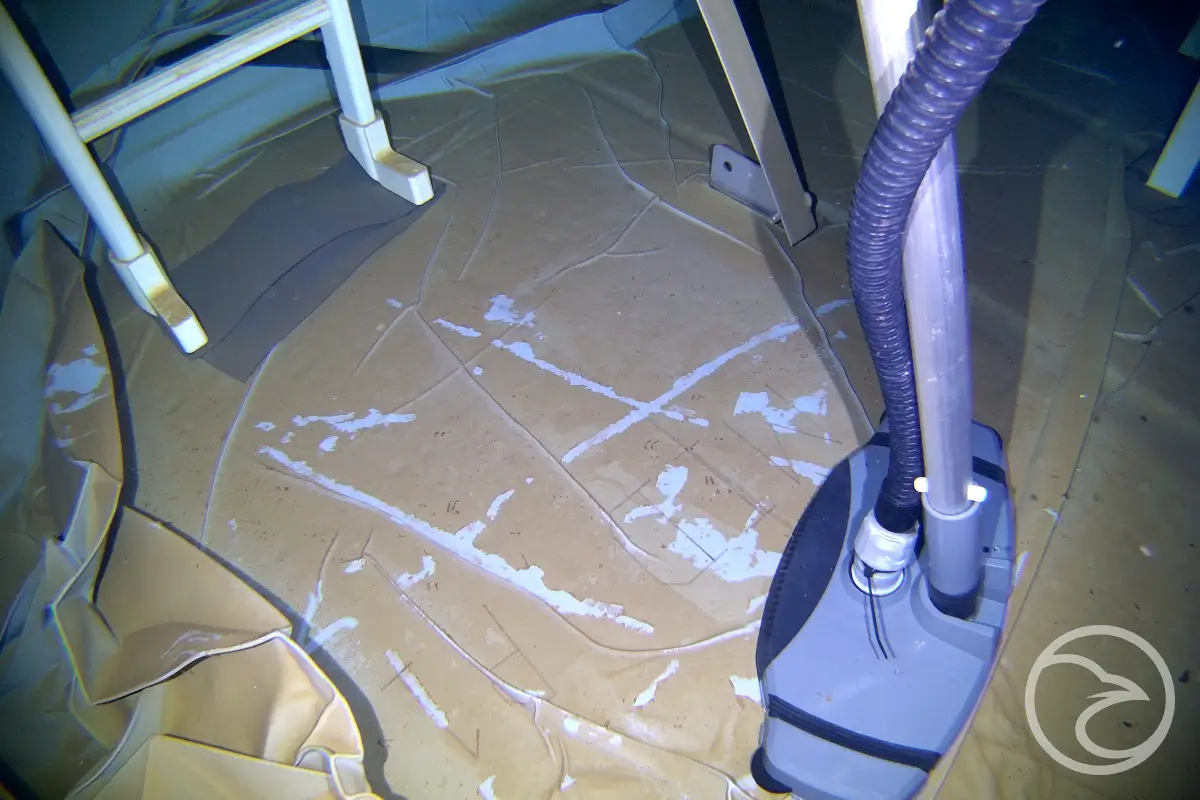
Sediment is one of the clearest signs that cleaning may be required. Small particles can enter or develop within a water storage system. Gravity causes heavier material to settle. Over time, this creates a layer on the tank floor.
The amount can depend on:
- incoming water quality;
- water source;
- tank design;
- water turnover;
- filtration;
- environmental exposure;
- cleaning history.
Visible sediment should not automatically be considered harmless. Tank sediments can contain concentrated contaminants and contribute to taste or odour problems.
Increasing sediment levels are a strong reason to assess cleaning requirements.
2. Cloudy or Discoloured Water
Water should be investigated when its normal appearance changes. Cloudiness can result from suspended particles or disturbed sediment. Discolouration can have several possible causes.
These may include sediment, corrosion products, organic material, or problems elsewhere in the system. The tank may not always be responsible. However, the internal condition should be considered during the investigation.
Water that suddenly changes appearance should not simply be ignored.
3. Unusual Taste or Odour
Unexpected taste or odour can indicate changes within the water storage system. Possible causes include organic matter, stagnant conditions, sediment, or biological activity. Australian guidance identifies biofilms as a potential source of off-tastes and odours.
These symptoms do not prove that the tank is dirty. They do indicate that the water system deserves investigation. Cleaning may form part of the corrective response after the cause is identified.
4. Sludge Accumulation
Sludge is more substantial than a light layer of settled material. It can contain fine sediment, organic matter, corrosion products, and other accumulated contaminants. Large deposits can create difficult internal conditions.
They can also reduce visibility during tank inspection. Sludge levels should be monitored rather than allowed to increase indefinitely. Removing accumulated sludge is a recognised part of tank maintenance.
5. Visible Biological Growth
Visible growth inside a tank requires attention. Light, nutrients, temperature, and water conditions can influence biological activity. Properly protected storage systems should limit opportunities for external contamination.
Australian Drinking Water Guidelines recommend securely roofed storage and measures to minimise biofilm growth. Unexpected biological growth may indicate more than a cleaning issue. The cause should also be investigated.
Damaged covers, sunlight exposure, poor sealing, or water quality problems may contribute.
6. Debris Inside the Tank
Leaves, insects, dirt, or other foreign material should not normally accumulate inside a protected tank. Their presence can indicate a problem with tank protection.
Possible entry points include:
- damaged covers;
- unscreened vents;
- deteriorated seals;
- open access points;
- damaged overflow screens;
- poorly protected inlets.
Cleaning removes the existing debris. However, preventing future entry is equally important. Otherwise, the same problem can quickly return.
7. Long Periods Without Cleaning
Sometimes the warning sign is simply the maintenance history. A tank may appear normal externally while containing substantial sediment. Facility owners may not know when the tank was last cleaned.
Records can also disappear when building management changes. An unknown cleaning history is a good reason to assess internal condition. Cleaning should be condition-based rather than delayed until water visibly deteriorates.
8. Recent Contamination Event
Certain events can create an immediate reason to assess the tank.
Examples can include:
- damaged tank covers;
- animal entry;
- flooding;
- contaminated incoming water;
- construction debris;
- major system repairs;
- foreign material entering the tank.
Cleaning requirements depend on what entered the system. Additional disinfection or water testing may also be required.
For example, Victorian health guidance recommends cleaning and additional corrective measures following animal contamination.
9. Problems Found During Inspection
Tank inspections sometimes reveal contamination before users notice water quality changes. An inspection may identify sediment, debris, corrosion products, biological growth, or damaged components.
These findings can help determine whether cleaning should become a maintenance priority. This is one reason cleaning and inspection should not be managed as completely separate activities.
What Causes Water Tanks to Become Dirty?
A dirty tank does not necessarily mean it has been poorly managed. Some accumulation occurs naturally over time. Incoming water can contain small quantities of suspended material.
These particles gradually settle when water movement slows.
Other contributing factors include:
- poor inlet screening;
- damaged tank covers;
- sediment in incoming water;
- low water turnover;
- environmental dust;
- insects or animals;
- organic debris;
- internal corrosion;
- ageing components;
- insufficient maintenance.
Rainwater tanks can face additional contamination sources. Roofs and gutters can collect leaves, animal material, dust, and other debris. Australian guidance recommends screens and first-flush systems to reduce this contamination.
Understanding the source matters. Cleaning without addressing the cause may provide only temporary improvement.
Different Methods of Water Tank Cleaning
There is no single cleaning method suitable for every tank. Tank size, design, water use, access, contamination, and structural condition influence the approach.
Traditional Drain-and-Clean Methods
A traditional approach involves taking the tank offline and draining its contents. Accumulated material can then be physically removed. The tank may also be washed and treated according to its application and requirements.
This method can provide broad access to internal surfaces. However, draining a large tank creates operational considerations.
The facility may need to manage:
- water loss;
- temporary shutdown;
- alternative water supply;
- wastewater disposal;
- recommissioning.
The tank’s structural condition should also be considered before selecting a cleaning method.
Sediment Removal Without Complete Draining
Some tanks can have sediment removed without completely emptying them. This can involve siphoning or specialised cleaning equipment. Victorian guidance notes that sediment can sometimes be removed by siphoning without emptying the tank.
Suitability depends on the tank and contamination level. This approach is not appropriate for every situation.
Robotic Water Tank Cleaning
Remote technology provides another option for suitable tanks. Underwater robotic systems can operate inside tanks without requiring a person to enter the confined space. The equipment can be used to target sediment and deposits on the tank floor.
Depending on the system and application, robotic cleaning may reduce:
- confined-space entry;
- tank downtime;
- water loss;
- disruption to facility operations.
Remote equipment can be particularly useful for large operational tanks. However, suitability depends on access, internal configuration, water conditions, and cleaning objectives.
Robotic cleaning should therefore be considered as one method rather than a universal replacement for conventional cleaning.
How Often Should Water Tanks be Cleaned?
There is no single cleaning interval suitable for every water tank. Some Australian guidance recommends checking tanks every two to three years for accumulated sediment. Other guidance recommends cleaning certain private water tanks at least every two years.
However, commercial facilities should consider their specific operating conditions and applicable requirements.
Cleaning frequency can depend on:
- tank application;
- water source;
- water quality;
- sediment accumulation;
- tank material;
- usage level;
- environmental exposure;
- inspection findings;
- previous contamination;
- regulatory requirements;
- site maintenance procedures.
A tank accumulating sediment quickly may need earlier attention. A fixed calendar should not replace condition monitoring. Inspection results can help facility owners establish a more appropriate cleaning schedule.
What Happens if Water Tank Cleaning is Delayed?
Delaying cleaning does not guarantee immediate failure. However, contamination and sediment can continue accumulating. This can create several problems over time.
Greater Sediment Accumulation
Sediment does not normally disappear on its own. Additional material can settle on top of existing deposits. Eventually, removal may become more difficult.
Water Quality Concerns
Sediment, organic material, and biofilm can contribute to undesirable water conditions. Potential effects include changes in appearance, taste, or odour.
The significance depends heavily on the tank application.
Reduced Inspection Visibility
Heavy deposits can hide parts of the tank floor. This can make internal condition assessment more difficult. Cleaning may reveal corrosion, coating damage, cracks, or other defects hidden beneath deposits.
More Complicated Maintenance
Small maintenance issues can become harder to assess when the tank interior is heavily contaminated. This can increase the scope of future work.
Operational Disruption
A neglected tank may eventually require more extensive intervention. Planned cleaning is usually easier to manage than an unexpected water storage problem.
What Types of Water Tanks Require Cleaning?
Cleaning is relevant across many tank materials. However, cleaning techniques should reflect the material and construction.
Steel Water Tanks
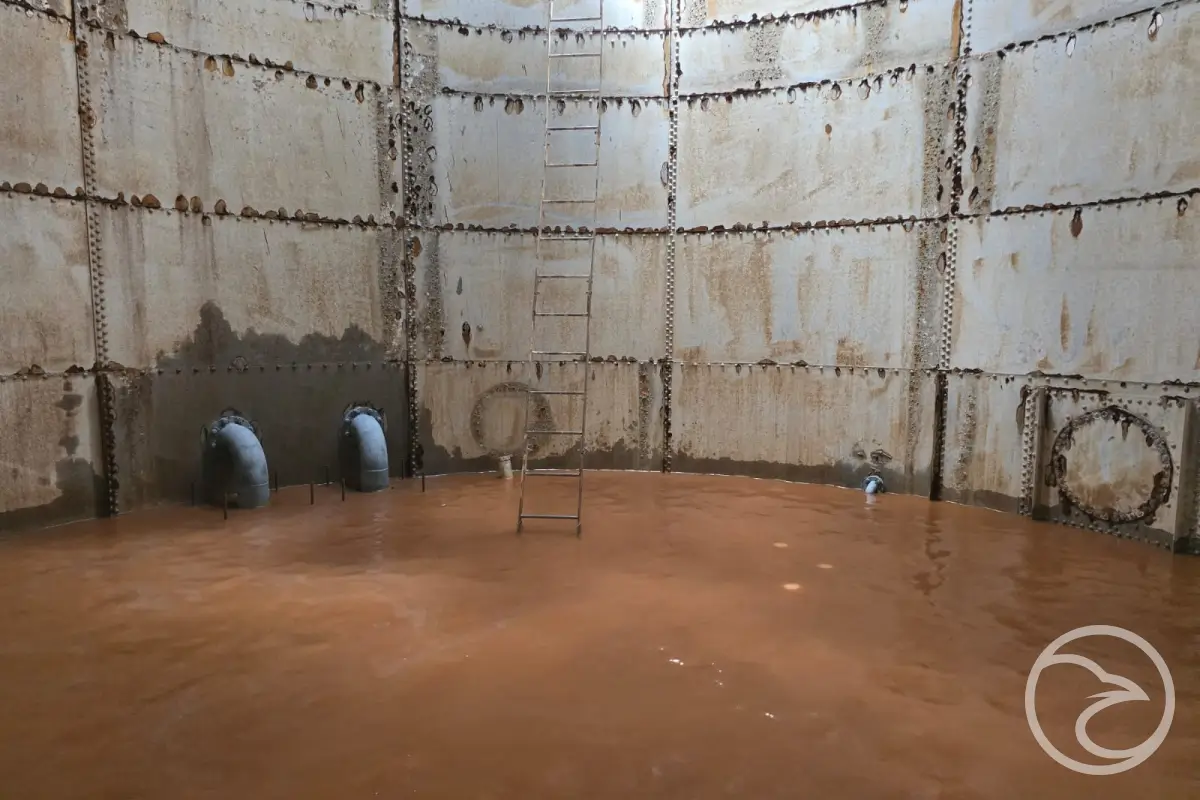
Steel tanks may accumulate sediment while also experiencing corrosion or coating deterioration. Cleaning provides an opportunity to observe internal surfaces more clearly.
GRP and FRP Tanks
GRP panel tanks are corrosion-resistant but can still accumulate sediment and biological material. Joints, seals, internal bracing, and fittings should also be considered during maintenance.
Concrete Tanks
Concrete tanks can collect sediment and deposits like other storage systems. Their surfaces and structural condition require appropriate cleaning methods.
Polyethylene Tanks
Poly tanks are common in smaller water storage applications. Sediment and organic material can still accumulate over time. Cleaning techniques should avoid unnecessary surface damage.
Rainwater Tanks
Rainwater systems can receive debris from roofs and gutters.
Good inlet protection reduces contamination but does not eliminate maintenance requirements.
Applications Where Tank Cleanliness is Particularly Important
The importance of cleaning depends partly on how stored water is used. Potable water storage naturally places strong emphasis on water quality. Commercial and community facilities using private drinking water should maintain regular monitoring and maintenance programs.
Other applications can include:
- commercial water storage;
- industrial process water;
- fire water storage;
- rainwater harvesting;
- agricultural water;
- irrigation systems;
- emergency water storage;
- building services.
The cleaning standard and method may differ between these applications. Facility owners should therefore avoid applying one maintenance approach to every tank.
Water Tank Cleaning and Maintenance
Cleaning should form part of a broader maintenance strategy. A clean tank can still have mechanical or structural defects. Likewise, a structurally sound tank can still contain excessive sediment.
Routine maintenance can include checking:
- access hatches;
- vents;
- screens;
- seals;
- overflows;
- pipe connections;
- valves;
- external surfaces;
- supporting structures;
- internal components.
Maintenance should also address the causes of contamination. For example, cleaning sediment without repairing a damaged inlet screen leaves the underlying problem unresolved. Documented maintenance programs can improve consistency over the tank’s service life.
The Australian Drinking Water Guidelines support documented inspection and maintenance programs for water supply equipment. Learn how regular cleaning fits into a wider maintenance strategy in our water tank maintenance guide.
How are Tank Cleaning and Inspection Connected?
Cleaning and inspection serve different purposes. However, they often work best together. Cleaning removes unwanted material. Inspection assesses the condition of the tank and its components. Sediment can hide sections of the tank floor.
Deposits may also obscure corrosion or surface deterioration. Cleaning can therefore improve visibility for detailed assessment. Inspection can also determine whether cleaning is required.
For example, an internal assessment may identify sediment before it affects water appearance.
Inspection findings can help answer several questions:
- How much sediment has accumulated?
- Where is it concentrated?
- Is contamination entering through a defect?
- Are internal surfaces deteriorating?
- Are structural components affected?
- Should cleaning frequency change?
This creates a useful maintenance cycle. Inspect → identify → clean → assess → maintain → monitor.
Rather than treating each service separately, facility owners can use them as connected asset-management activities. Visit our ROV tank inspection page to discover how remote technology can help identify sediment and internal tank issues.
Can Facility Owners Clean Water Tanks Themselves?
External maintenance and simple visual observations may sometimes be performed by facility personnel. Internal tank cleaning is different. Water tanks can meet the definition of confined spaces.
Confined spaces can contain hazardous atmospheres, oxygen deficiencies, and other serious hazards. Safe Work Australia states that the need for confined-space entry should be eliminated where reasonably practicable. Its guidance specifically identifies remote cameras and external cleaning equipment as ways to avoid entry.
Facility owners should therefore avoid treating tank entry as routine cleaning work. The appropriate method should consider tank design, hazards, access, and applicable safety requirements.
Risks Facility Owners Should Consider
Tank cleaning involves more than removing dirt. Facility owners are responsible for considering broader operational and safety risks.
These can include:
- confined-space hazards;
- water contamination;
- business interruption;
- incorrect cleaning methods;
- damage to internal surfaces;
- water disposal;
- incomplete sediment removal;
- unsafe access;
- poor recommissioning;
- contamination during maintenance.
There is also a risk in doing nothing. A tank can appear operational while internal conditions continue deteriorating.
This is why records, inspections, and scheduled maintenance are valuable. They provide evidence of changing conditions before those changes become obvious.
How to Know When it is Time to Act
Facility owners do not need to wait for heavily contaminated water. Several indicators can justify further assessment.
These include:
- visible sediment;
- sludge accumulation;
- unusual water colour;
- unexpected taste or odour;
- debris inside the tank;
- biological growth;
- contamination events;
- unknown cleaning history;
- concerning inspection findings.
One warning sign may not always mean immediate cleaning is required. The cause and severity should first be understood.
However, several signs appearing together create a stronger reason for action.
Building a Better Water Tank Cleaning Strategy
An effective cleaning strategy starts with knowing the asset. Record the tank type, size, application, and water source. Keep previous inspection and cleaning reports. Document contamination events and repairs.
Monitor sediment rather than relying entirely on fixed dates. Coordinate cleaning with inspections when practical. Review recurring problems after each cleaning cycle. Most importantly, consider why contamination is developing.
A clean tank can become dirty again quickly when the original source remains. Prevention should therefore accompany cleaning.
Final Thoughts
Water tank cleaning is an important part of managing water storage assets. Sediment and other deposits can gradually accumulate even when a tank appears normal externally. Facility owners should know the early warning signs.
Visible sediment, sludge, debris, water changes, and biological growth can all indicate the need for attention. Maintenance history is equally important. A tank with no documented cleaning or inspection history may deserve assessment even without obvious symptoms.
Cleaning methods can range from conventional drain-and-clean approaches to remote and underwater robotic systems. The appropriate method depends on the tank, contamination, application, and operational requirements. Cleaning should also be connected with inspection and maintenance. Cleaning removes accumulated material.
Inspection identifies tank condition and developing defects. Maintenance addresses the problems that can allow contamination to return. Together, these activities provide a more complete approach to water tank management.
For facility owners, the goal is not simply having a tank that looks clean. The goal is understanding its condition and maintaining reliable water storage over the long term.